

Kanopi Team

Top 10 Web Development Agencies for Nonprofits in 2026

Nonprofits have unique digital needs, from donor portals to CRM integrations to volunteer hubs, that standard commercial web development agencies may not understand. That’s why, for many mission-driven organizations, it’s worth it to work with a dedicated nonprofit web development agency equipped with the expertise you need to spread awareness and engagement of your mission.

This guide explores 10 of the best web development agencies for nonprofits, along with tips for choosing the right partner for your needs. 

Why should nonprofits invest in web development and design?

Investing in professional web development and design allows your organization to: 

  • Build trust and credibility with your audience. 68% of web users say that an organization’s website impacts its credibility. A professionally designed site builds this by incorporating modern UX standards and essential trust signals. 
  • Convert visitors into donors. In 2025, the average nonprofit donation page conversion rate was 11% on desktop and 8% on mobile. Working with a dedicated nonprofit web development consultant can help your organization meet or exceed these targets by turning casual visitors into true supporters of your mission. 
  • Comply with privacy regulations. Nonprofit organizations operating in the healthcare or education sectors may need to comply with regulations such as FERPA and HIPAA. Web development agencies help your organization ensure full compliance and avoid legal liability.
  • Enhance site accessibility. Web development agencies can make your website fully accessible by designing it in accordance with the Web Content Accessibility Guidelines (WCAG), a universally accepted set of standards for making websites accessible to visitors with disabilities.

Investing in your website’s development and design can pay for itself when your highly optimized website starts driving greater community engagement and donor support. 

Why should nonprofits work with a web development agency?

Nonprofits often face challenges such as limited staff capacity and tight resources. You might simply not have the skills available on your marketing team to build or update your website effectively, especially if you’re a large or growing organization. 

Therefore, many nonprofits work with web development agencies because they offer: 

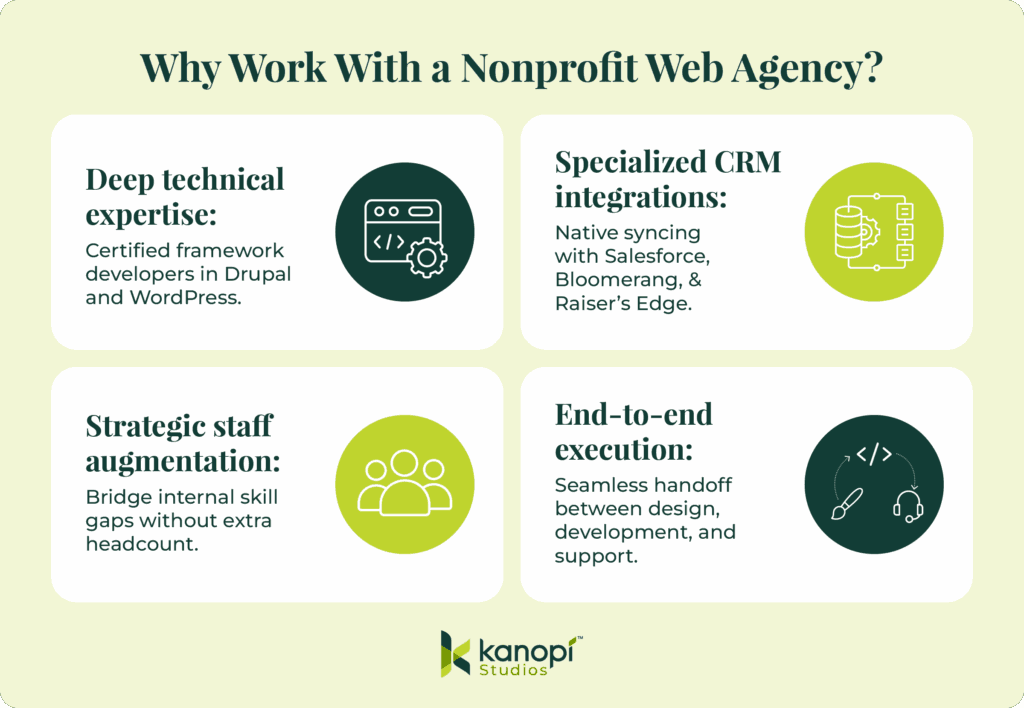
Infographic titled “Why Work with a Nonprofit Web Agency?” Includes four reasons: deep technical expertise, specialized CRM integrations, strategic staff augmentation, and end-to-end execution.
  • Deep technical expertise: Decades of collective experience, formal certifications, and specialized framework training.
  • Specialized integrations: Custom APIs built for seamless connectivity with nonprofit CRMs like Salesforce NPSP, Raiser’s Edge, Bloomerang, and DonorPerfect.
  • Staff augmentation: Direct access to strategic talent that bridges skills gaps within your internal team.
  • End-to-end execution: Seamless collaboration between design and engineering to prevent functional gaps post-launch.

Top 10 nonprofit web development companies

Let’s take a look at 10 of the best nonprofit web development companies to consider partnering with, broken down by their services, specialties, and pricing. 

  1. Kanopi Studios
  2. Cornershop Creative
  3. Elevation
  4. Constructive
  5. Mighty Citizen
  6. Zuri Group
  7. Statement
  8. Fifty & Fifty
  9. Giant Rabbit
  10. Loop

Top 10 Web Development Agencies

Discover the best digital partners for mission-driven organizations. Hover or tap the cards to learn more.
1. Kanopi Studios

Contact our team to start building a better website. 
About Kanopi Studios: Kanopi is a dynamic, woman-run, and inclusive digital agency that helps nonprofits elevate their missions online. We don’t act like a cold, transactional vendor that disappears after launch. Instead, we function as an ongoing strategic partner, supporting you beyond launch day. 
Best for: Enterprise-grade WordPress and Drupal builds backed by human-centric design, baked-in accessibility, and a deeply collaborative, long-term partnership. 

Services: 

  • Website research and strategy: Deep-dive audience research, stakeholder workshops, competitor analyses, and technical planning to find the “why” behind your website.
  • User experience and content strategy: Custom persona development, user journey mapping, visual wireframing, and accessible storytelling that connects supporters to your mission.
  • Custom website design and development: Tailored, mobile-first designs (never using templates) and advanced engineering in Drupal and WordPress, including complex multi-site setups and headless site architectures.
  • Proactive website support and maintenance: Proactive security updates, continuous speed tuning, conversion rate optimization, and training for your internal staff.

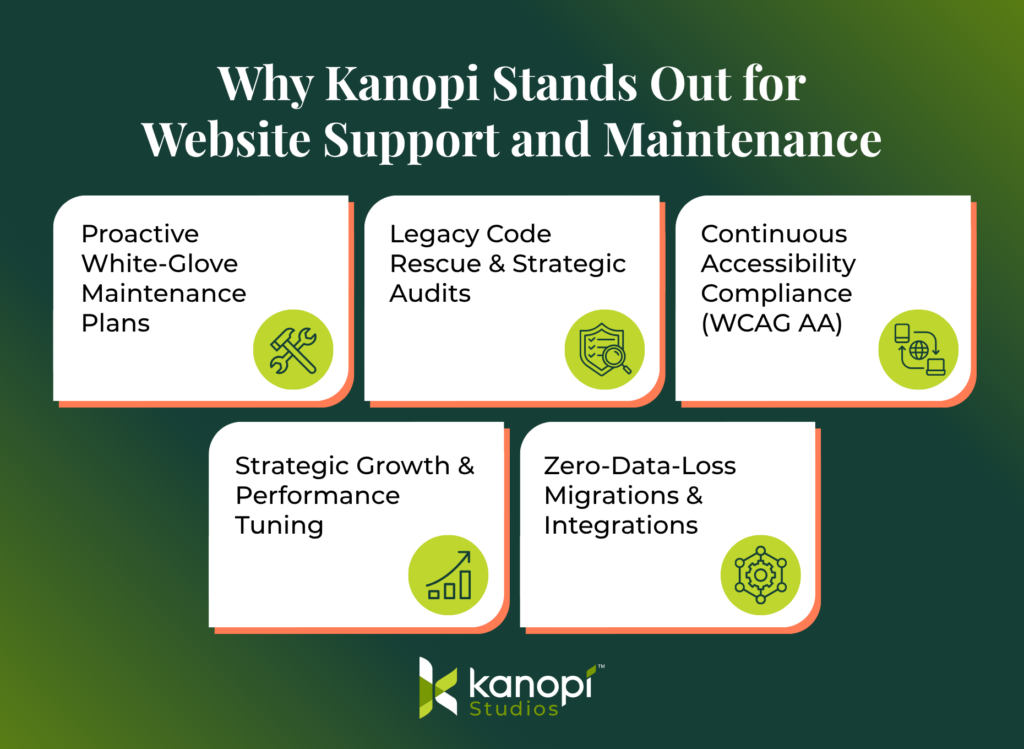
One of Kanopi’s rarest and most valuable traits is our willingness and ability to rescue, refine, and stabilize code originally built by other agencies. If your organization is saddled with a messy legacy website or a stalled development project, Kanopi’s highly experienced engineers can jump in at any stage to bring your site to a secure, high-performing finish line. 

Pricing: Custom project pricing is tailored directly to your organization’s unique scope and goals, with ongoing, dedicated white-glove support retainers available to protect, maintain, and continuously grow your digital investment long after launch

2. Cornershop Creative

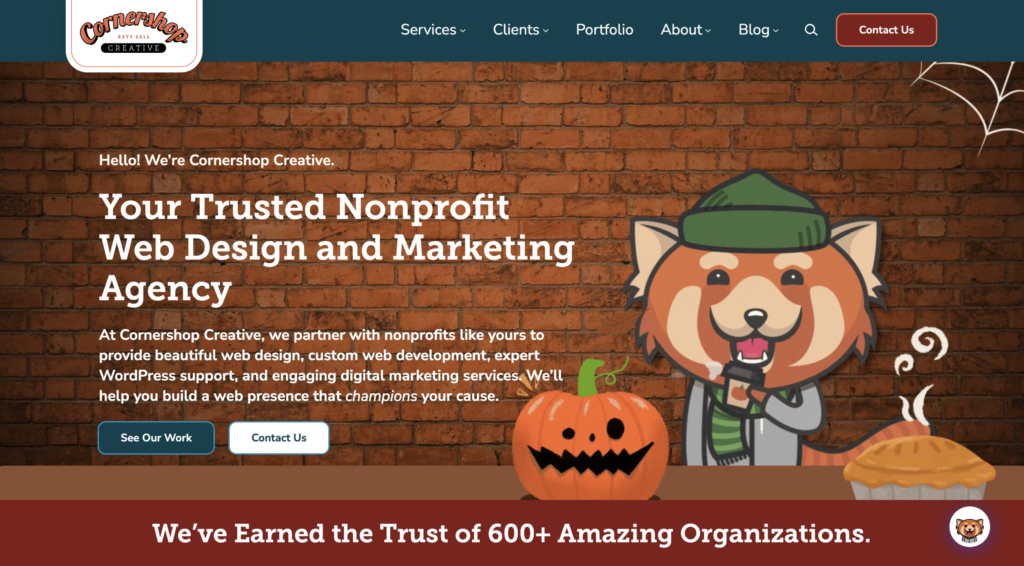
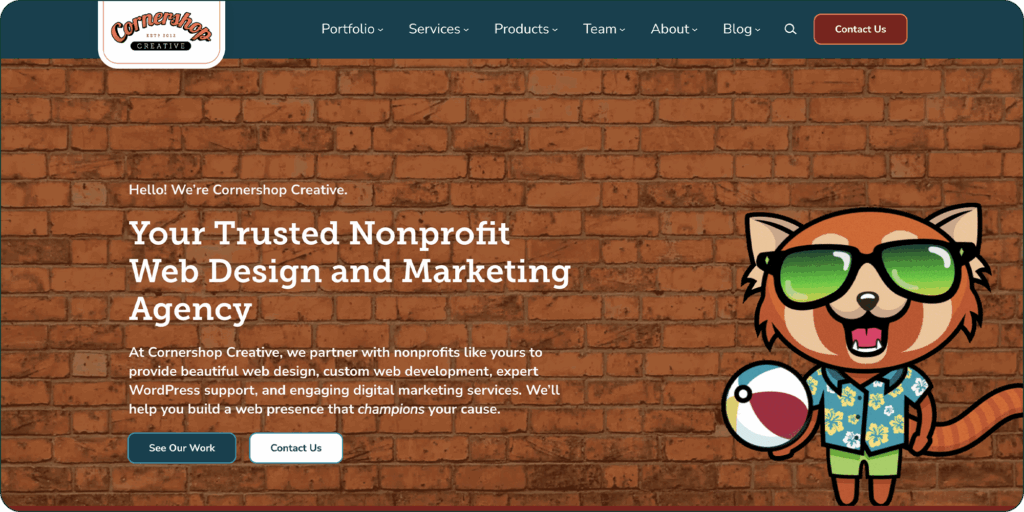
The Cornershop Creative website homepage

About Cornershop Creative: Founded in 2012, Cornershop Creative is a web design and marketing agency for nonprofits. Their primary focus is to help organizations achieve their goals while respecting their time and budget. 

Best for: Custom WordPress development and tailored CRM integrations

Services: 

  • Nonprofit website design and development
  • WordPress maintenance and support
  • CRM and campaign implementation 

Pricing: Project-based pricing; requires a custom quote

3. Elevation

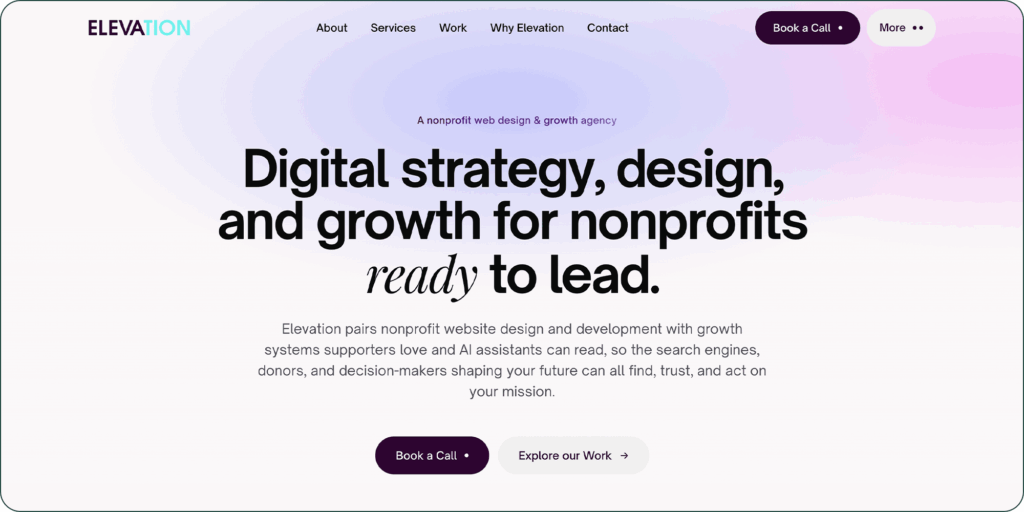
The Elevation website homepage

About Elevation: Elevation is a nonprofit website design and growth agency based in Washington, D.C. They work exclusively with nonprofits and have served hundreds of organizations over their two decades of existence. 

Best for: Comprehensive digital services and accessible, ongoing sustainability support bundles 

Services: 

  • Web development and user experience design
  • Digital marketing and Google Ad Grant management
  • Site sustainability (including security, hosting, and CMS updates)

Pricing: Custom quotes for main projects, with ongoing monthly hosting and sustainability plans starting at $75 to $85/month 

4. Constructive

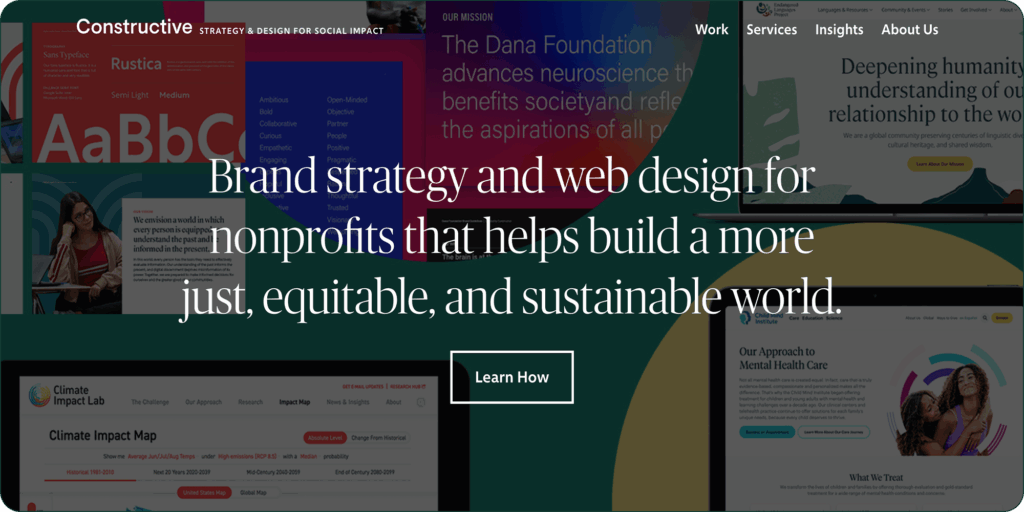
The Constructive website homepage

About Constructive: Constructive offers brand strategy and web design services to help nonprofits strengthen their relationships with their audiences. They work with organizations in many charitable sectors, from education and the arts to healthcare and social services. 

Best for: Brand-led web design

Services: 

  • Digital strategy and web design
  • Brand strategy
  • Content strategy and development

Pricing: Custom pricing based on the organization’s unique requirements

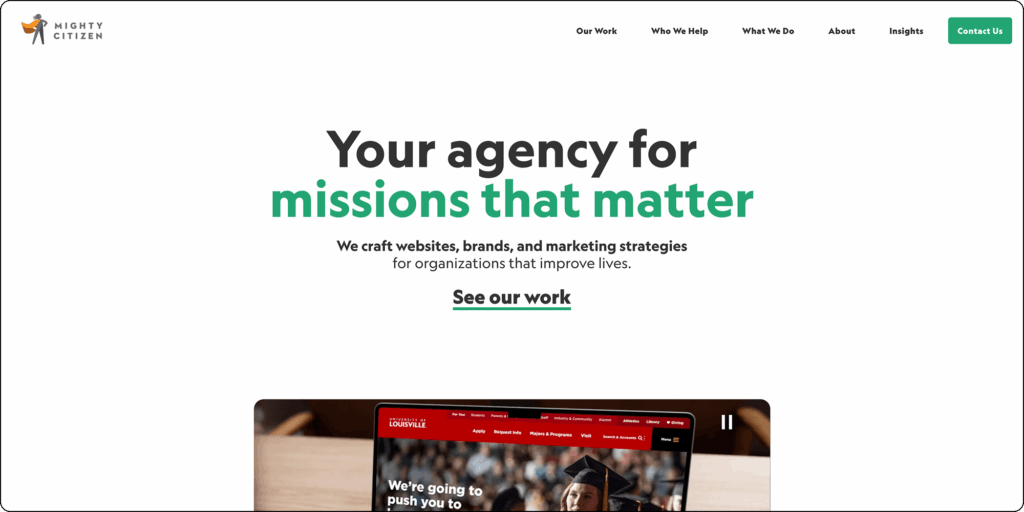
5. Mighty Citizen

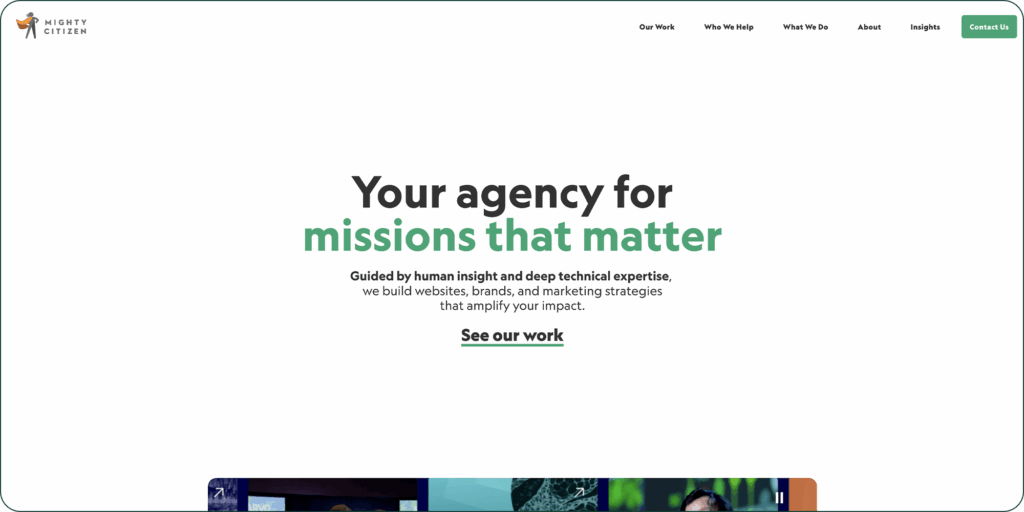
The Mighty Citizen website homepage

About Mighty Citizen: Mighty Citizen helps associations, nonprofits, higher education institutions, and government organizations build mission-focused websites to amplify their impact. They prioritize creative problem-solving and proactive follow-through in their client relationships. 

Best for: Research-driven digital transformation and usability for mission-driven organizations

Services: 

  • Website design and development
  • Audience research, content strategy, and governance
  • Usability testing and accessibility 

Pricing: Custom-tailored pricing based on time, materials, and specific deliverables

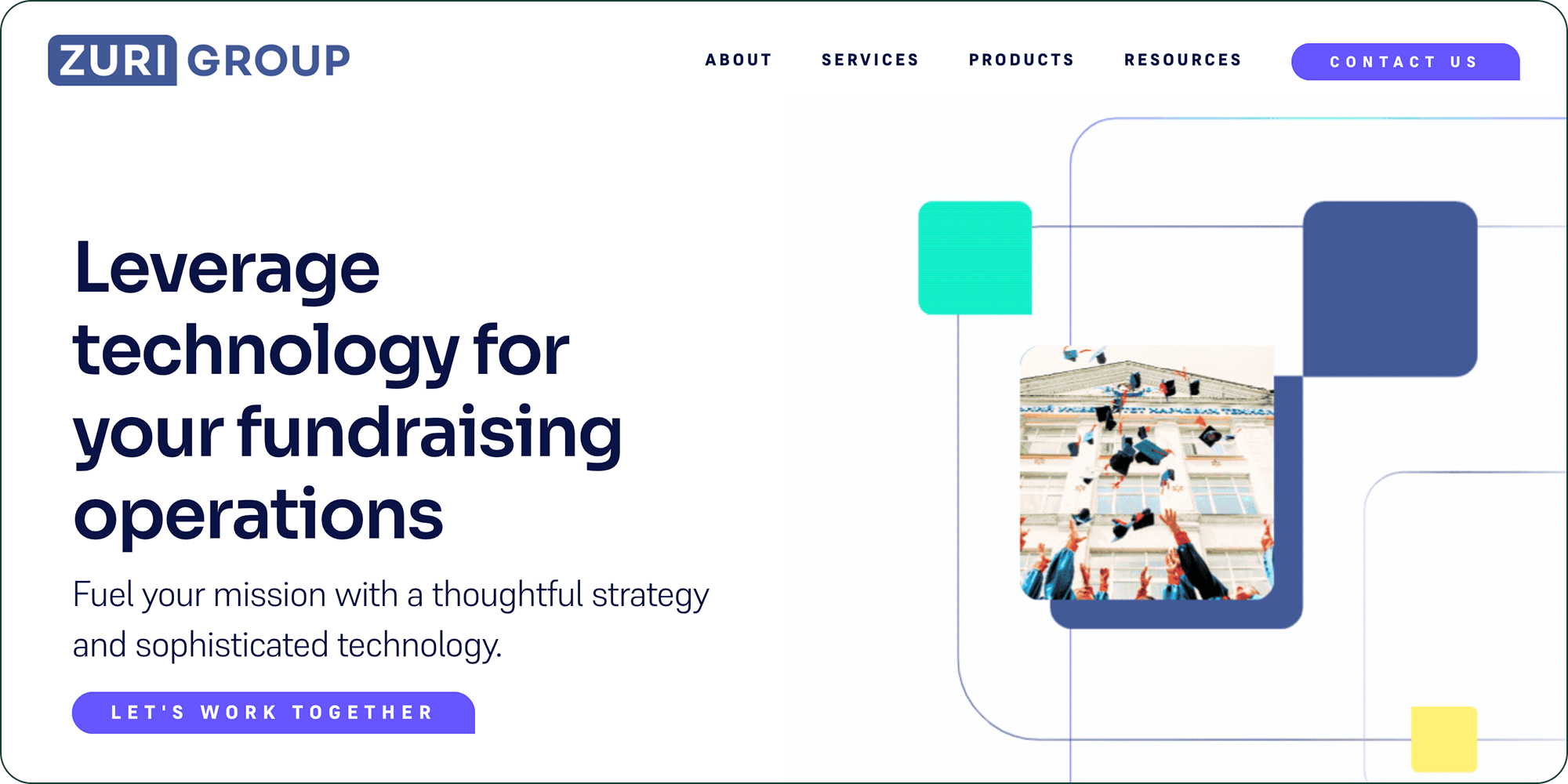
6. Zuri Group

The Zuri Group website homepage

About Zuri Group: Zuri Group comprises technology consultants dedicated to helping nonprofits advance their missions through better technology use and integration. They can help organizations migrate to new systems that better serve their needs. 

Best for: Complex CRM integrations and holistic operational technology assessments 

Services: 

  • Custom development and integrations
  • Digital transformation and marketing strategies
  • Data insights: analytics and reporting (including Tableau and Power BI)

Pricing: Custom quote required based on the complexity of the data migration and development needs 

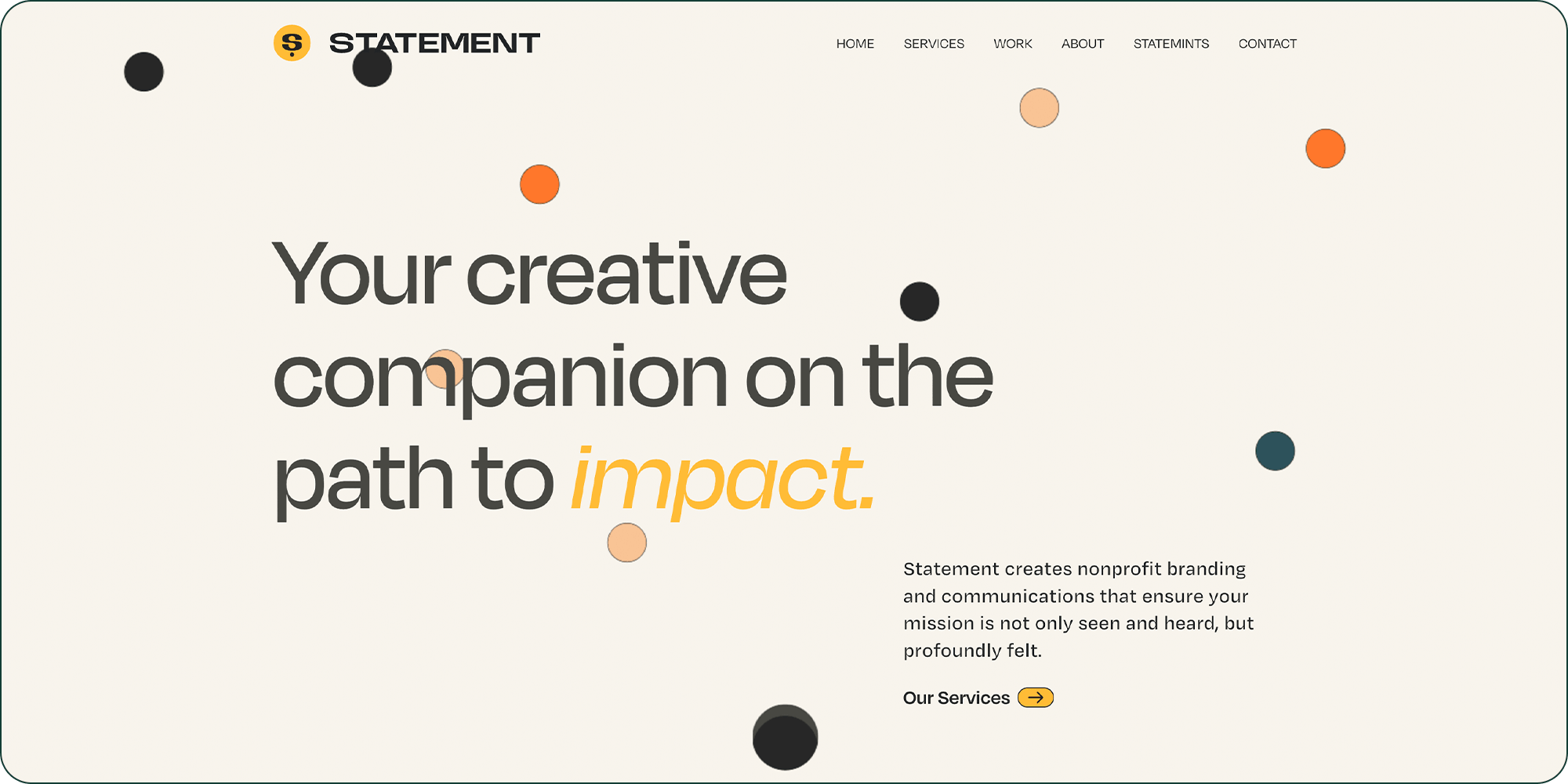
7. Statement

The Statement website homepage

About Statement: Statement is a nonprofit branding and communications consulting agency that helps organizations more effectively communicate their missions. They provide dedicated support for all website needs and specialize in working with small organizations. 

Best for: Small nonprofits focused on holistic digital strategy

Services: 

  • Strategy and consultancy services
  • Web and technology services
  • Brand and creative services 

Pricing: Custom pricing based on the scope of digital transformation

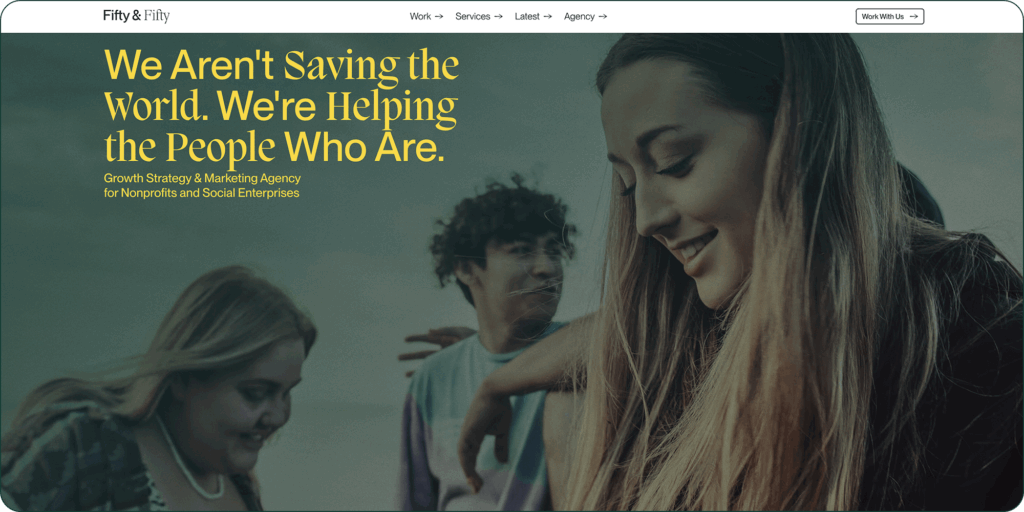
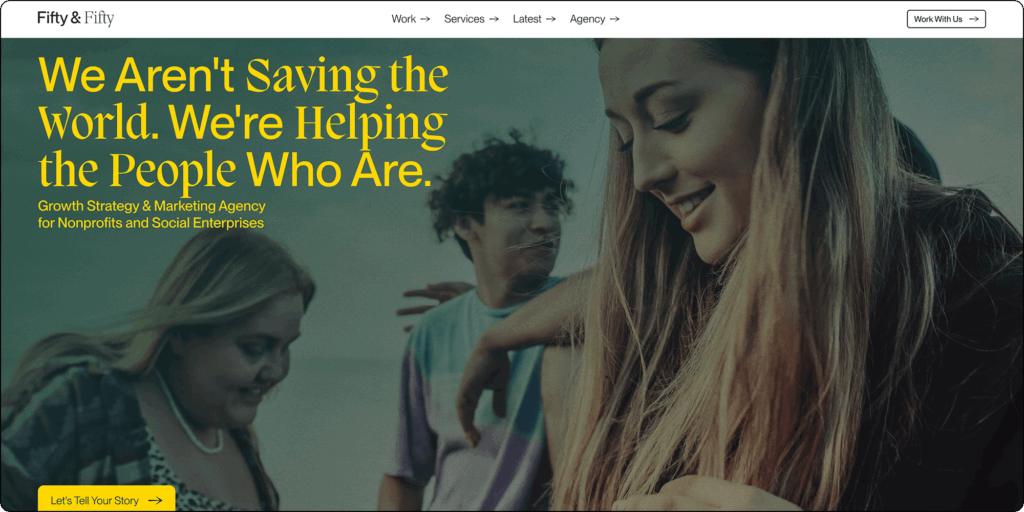
8. Fifty & Fifty

The Fifty & Fifty website homepage

About Fifty & Fifty: Fifty & Fifty offers growth strategy and marketing services for nonprofits and social enterprises. They unify marketing and fundraising efforts to avoid integration headaches and build on successful strategies. 

Best for: Compelling digital storytelling

Services: 

  • Web and digital experience
  • Positioning and branding
  • Marketing and communications (SEO, paid media, content)

Pricing: Project-based pricing, where scopes are tailored to long-term engagement goals.

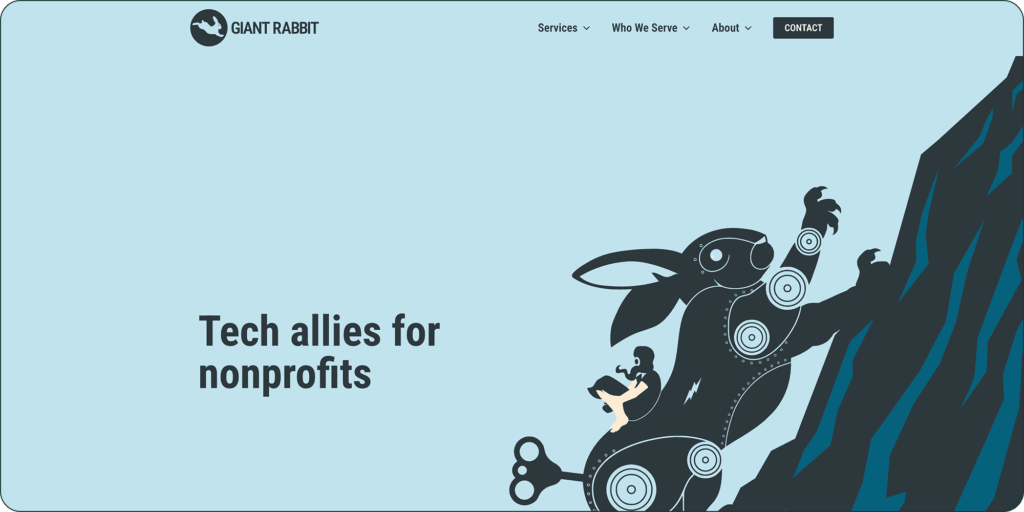
9. Giant Rabbit

The Giant Rabbit website homepage

About Giant Rabbit: Giant Rabbit offers nonprofit tech consulting for organizations of all sizes. They tailor their recommendations to each organization’s size and specific needs, helping them make sustainable decisions. 

Best for: Sustainable technology strategy, CRM consulting, and data migration tailored to nonprofit needs

Services: 

  • Technology strategy and audits
  • Website development and branding
  • CRM consulting and data migration

Pricing: Custom project estimates; they focus on plans that respect nonprofit budgets 

10. Loop

The Loop website homepage

About Loop: Loop collaborates with all types of nonprofits to harness the power of web design to promote their missions. Their research-driven approach helps organizations build strong digital foundations. 

Best for: A UX-first approach

Services:

  • Nonprofit website design and development
  • Brand strategy and messaging
  • Annual reports, infographics, and data visualizations

Pricing: Flexible pricing structures tailored to organizations of all sizes

How to choose the right web developer for your nonprofit

Need help narrowing down this list of top providers? Follow these steps to find the best web development partner for your nonprofit’s needs: 

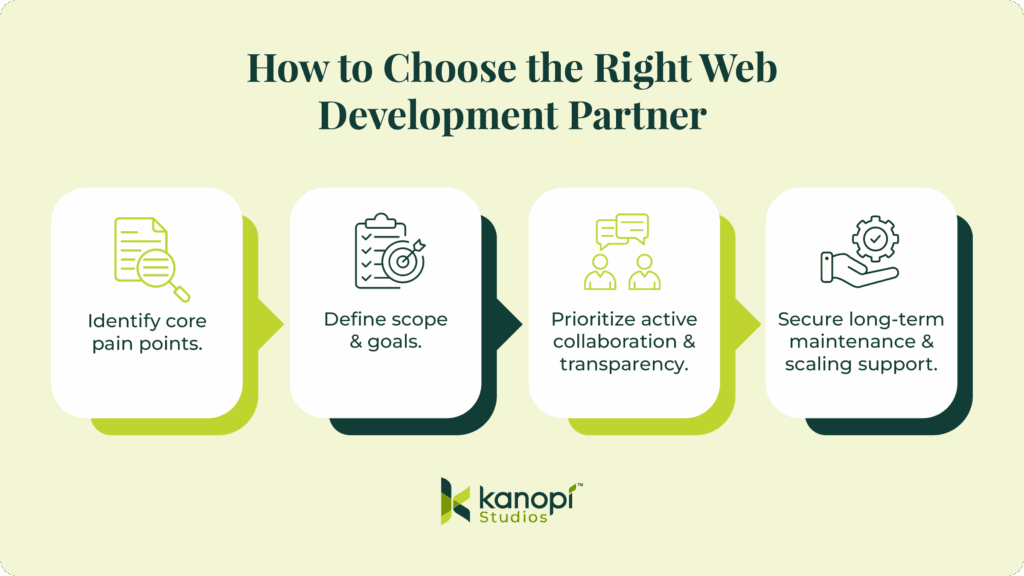
Infographic titled “How to Choose the Right Web Development Partner” with four tips: identify core pain points, set clear goals, prioritize active transparency and collaboration, and secure long-term maintenance and scaling support. 
  1. Identify your pain points. Are you struggling with donor drop-off? Is your CMS too hard for staff to use? Is the site painfully slow? Make sure your chosen web partner has experience specifically addressing your challenges. 
  2. Set clear goals. Do you want to complete a fairly simple visual refresh, or a more complex digital transformation (e.g., adding a member portal)? Prioritize finding a web agency that can align with the scope of your project. 
  3. Prioritize transparency and collaboration. Your web development partner should maintain full transparency and actively collaborate with your marketing team members. They should offer clear communication and frequent check-ins to assess progress and address feedback. 
  4. Plan for the future. Your website is a living product that must be carefully maintained over time. Ensure that the web developer you work with offers ongoing maintenance and support so your site doesn’t degrade over time. Choose a partner that will create structured plans to help you scale and make incremental, data-driven improvements over time. 

Nonprofit web design agencies: FAQs

What is the best web development company for nonprofit organizations?

While the ideal partner depends on your specific goals and tech stack, Kanopi Studios consistently ranks as a premier choice. Kanopi specializes in creating scalable, accessible web solutions tailored for mission-driven organizations, built on open-source platforms such as Drupal and WordPress. Their commitment to long-term maintenance and strategic partnership ensures your digital presence grows alongside your nonprofit’s impact. 

How can we find the best web agency for a small nonprofit?

Finding the best web design agency for small nonprofits requires prioritizing cost-efficiency and adaptability. Rather than investing in complex, fully custom enterprise builds, seek out agencies experienced in modular, scalable WordPress templates or tailored nonprofit solutions. Look for partners offering transparent pricing, clear support retainers, and a strong UX strategy to ensure your site delivers maximum value within your budget. 

How much does working with a web design agency for nonprofits cost?

Agency costs vary significantly based on project scope and technical complexity. Minor template adjustments or starter site setups may cost a few thousand dollars. However, fully custom web design and engineering for mid-sized to large nonprofits typically range from $25,000 to well over $100,000. Factors driving higher costs include custom CRM integrations, complex donor workflows, strict WCAG compliance for accessibility, and ongoing strategic support. 

What is the best website builder for nonprofits?

Open-source content management systems like WordPress and Drupal are top choices for nonprofits. WordPress excels for organizations needing user-friendly publishing, intuitive editing, and flexible marketing tools. Drupal is superior for enterprise-level organizations requiring robust security, complex content architectures, multilingual capabilities, and deep CRM integrations. However, selecting the best platform depends on your technical requirements, internal resources, and long-term scaling strategy. 

Wrapping up

Choosing an agency that understands the nonprofit ecosystem is critical to your long-term success. Your website is the backbone of your fundraising, storytelling, and community engagement efforts. By partnering with experts like Kanopi Studios, you ensure your platform remains secure, accessible, and perfectly aligned with your evolving mission for years to come. 

A diverse group of marketing professionals meets at a large conference table to discuss strategy

11 Standout Nonprofit Web Design Companies for 2026

Allison Manley
Allison Manley

Many nonprofit marketers believe their work is over once their new website goes live. However, the average lifespan of a site is only two years. Without dedicated ongoing support, mounting technical and user experience issues quickly decrease engagement.

To maximize your impact, your organization needs a web design agency that acts as a long-term strategic partner. The top agencies recognize that a successful digital presence requires continuous iteration to meet shifting donor expectations and rigorous tech standards.

Find the right partner to scale your digital presence in the sections below:

What defines a top nonprofit web design company?

Top nonprofit web design companies act as dedicated strategic partners, prioritizing the long-term technical stability and comprehensive accessibility of the sites they work on. These agencies have mastered open-source enterprise platforms (rather than basic software) and guarantee continuous lifecycle support.

With ongoing web expertise, nonprofits can more easily mitigate security vulnerabilities and maintain website uptime. The best nonprofit web design agencies help organizations:

  • Maintain their websites over time. Ongoing dedicated maintenance keeps your digital infrastructure stable. In other words, reliable partners stick around.
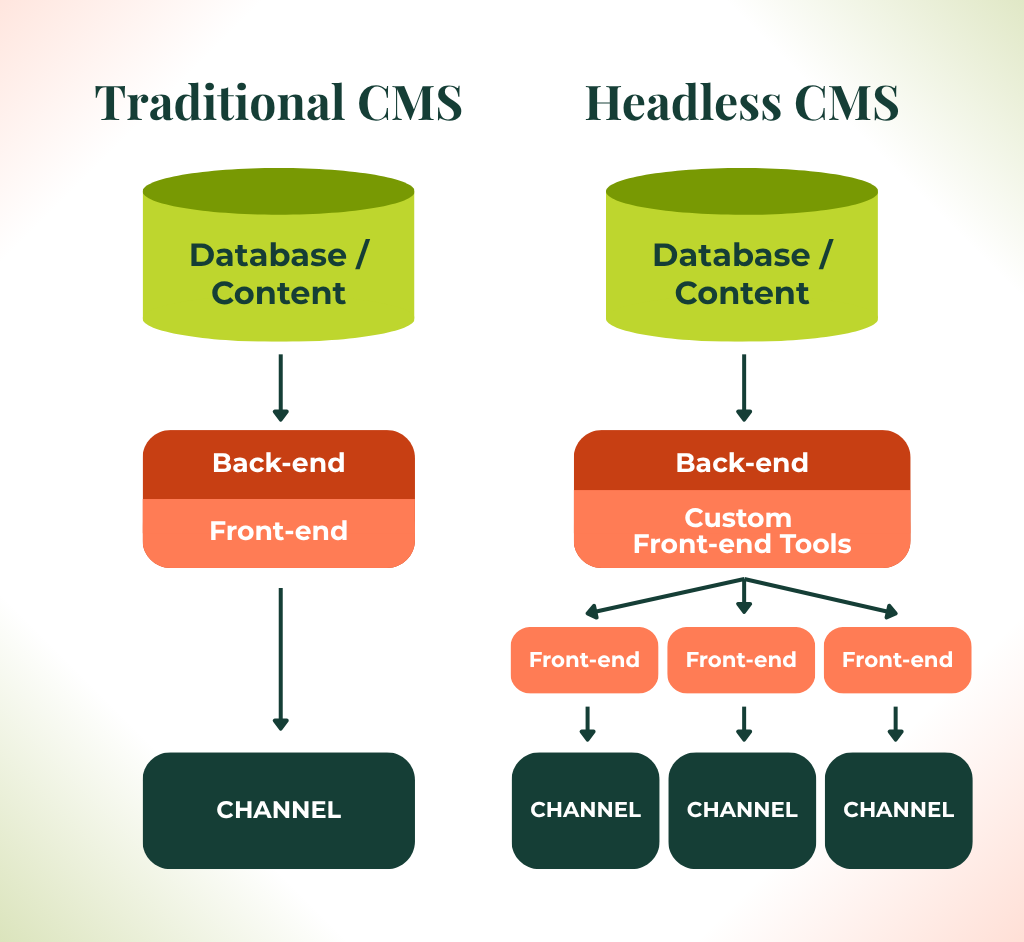
  • Handle enterprise-level complexity. Effective partners actively manage complex website architectures rather than relying on rigid proprietary software ecosystems. Custom database builds require foundational technical expertise to succeed, and top providers can deliver optimal flexibility.
  • Building for the future. Continuous iteration ensures nonprofit websites can adapt seamlessly to evolving donor expectations and major technological advancements. The digital philanthropic landscape shifts rapidly, so providers that offer continuous improvement are essential. 

When evaluating potential digital agencies, thoroughly examine internal team composition and structural hierarchy. It is important to find a provider that has dedicated technical architects working alongside visual creatives. This collaborative approach ensures that your provider will help you build a website that looks and works great. 

11 top nonprofit web design companies

The following web design providers span from specialized niche digital builders to advanced enterprise-level strategic partners offering robust lifecycle management. Thoughtfully review these options to find a partner whose strengths and expertise are aligned with your specific website needs. 

1. Kanopi Studios

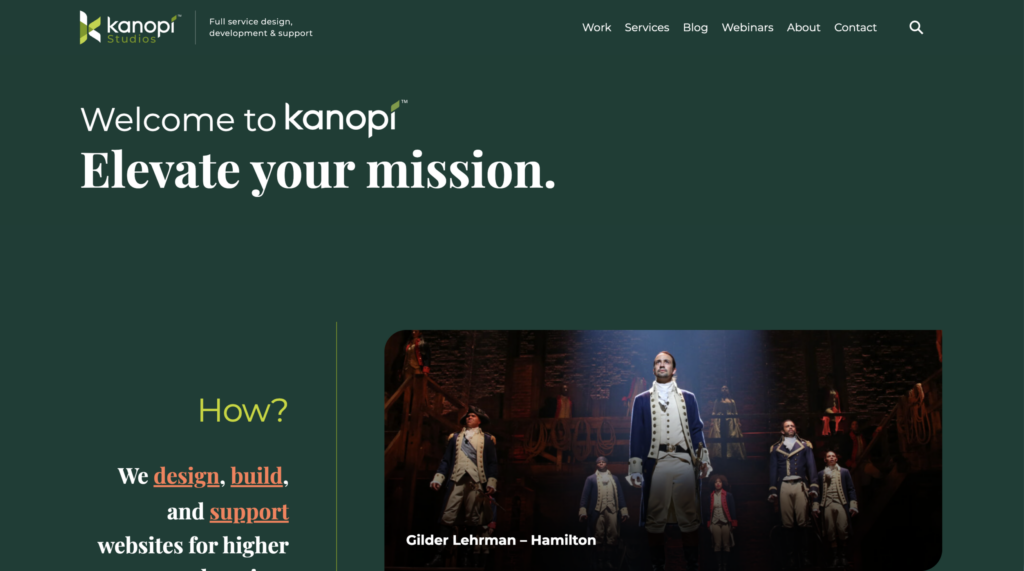
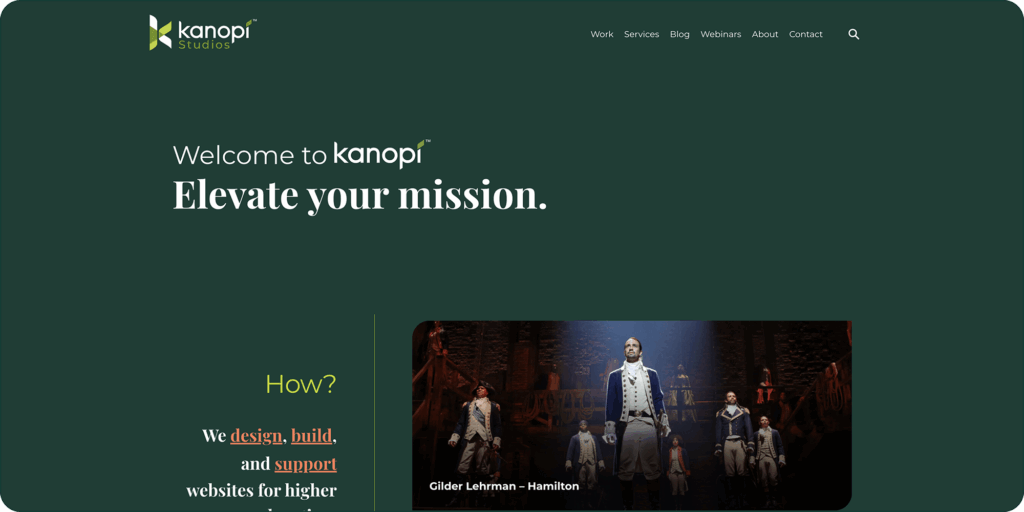
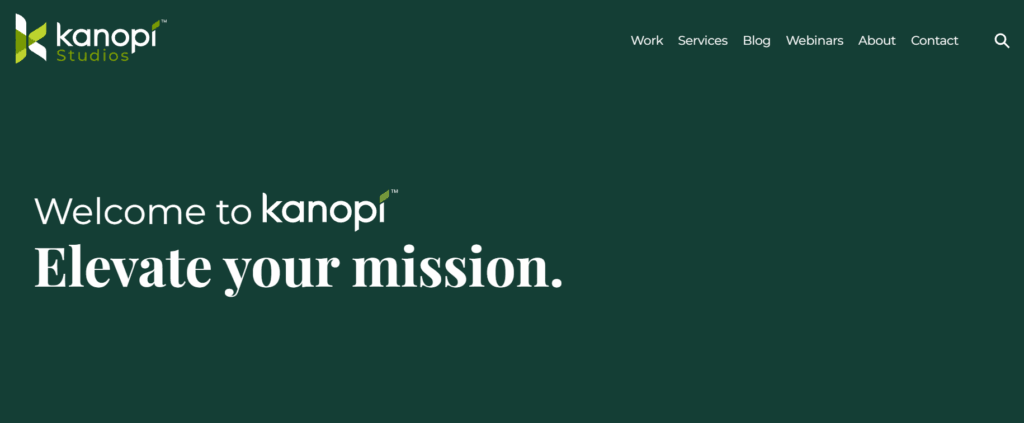
The Kanopi Studios website homepage
  • Clients served:
    • Mid-to-large nonprofits
    • Enterprise organizations
    • Higher education organizations
    • Healthcare organizations
  • Services provided:
    • Custom web design
    • Enterprise-level CMS development (Drupal/WordPress)
    • Website migrations
    • Code rescue
    • Ongoing website maintenance and support
    • Conversion optimization
  • Key differentiators: 
    • Kanopi offers code rescue services, meaning we can step in to fix and refine your website’s code, even if another agency first created it. 
    • Kanopi also embeds WCAG AA accessibility in every phase of the web design and development process, from early color contrast strategy to QA testing, ensuring digital inclusion is a fundamental architectural standard.
    • We provide white-glove ongoing support and continuous iteration to help nonprofits build websites that stay active and healthy for years. 

See how Kanopi’s growth-driven continuous improvement approach can help you scale up your website much faster than the traditional, linear web design approach:

Web Design Process Comparison

Traditional Waterfall Process

Strategy
Design
Development
Launch

Drawbacks

Rigid & Less FlexibleChanges are difficult and expensive once development begins.

Costly & Time-ConsumingLarge upfront investment with lengthy timelines.

Quickly OutdatedWebsite can become stale shortly after launch.

Growth-Driven Design Cycle

Benefits

Save Time & MoneySmaller initial investment with continuous improvements.

Always Fresh & RelevantContinuous optimization prevents site staleness.

Data-Driven DecisionsInformed improvements based on real user behavior.

  • Notable clients: 
    • First Tee: Kanopi delivered a custom WordPress multi-site solution that allows the organization to seamlessly house and manage over 150 individual member sites. 
    • Gilder Lehrman Institute: We delivered a full Drupal build for the institute’s Hamilton Education Program, creating a flexible and accessible digital experience. 
    • Exploratorium: Kanopi partnered with this San Francisco-based museum and nonprofit to execute a full Drupal build, guiding them through a highly collaborative discovery process. 

2. Elevation Web

The Elevation website homepage

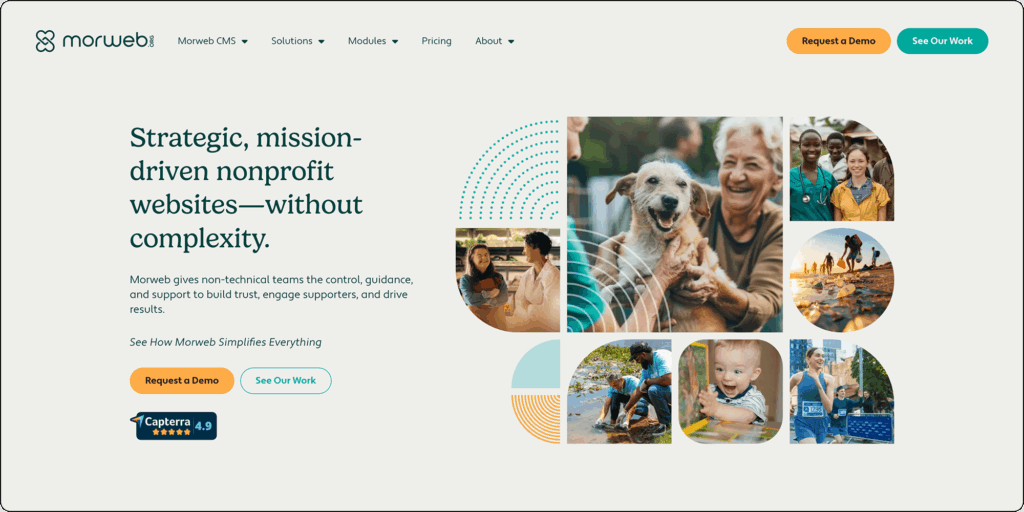
3. Morweb

The Morweb website homepage
  • Clients served: Nonprofits, schools, healthcare organizations, and associations.
  • Services provided: Web design and proprietary CMS software.
  • Key differentiator: Offers a proprietary CMS tailored specifically for nonprofits with built-in donation and event modules.
  • Notable clients: Engineers Without Borders USA, Mercy USA, New Futures

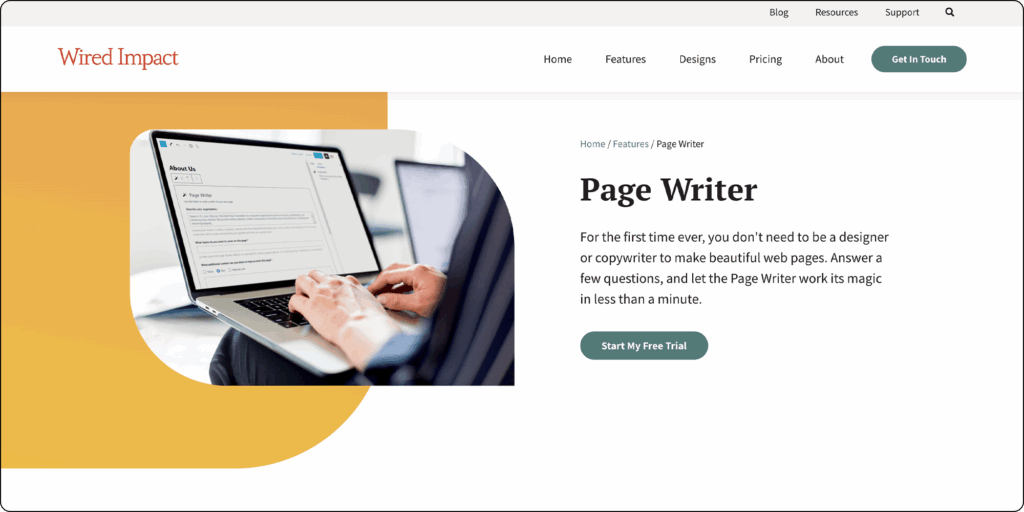
4. Wired Impact

The Wired Impact homepage

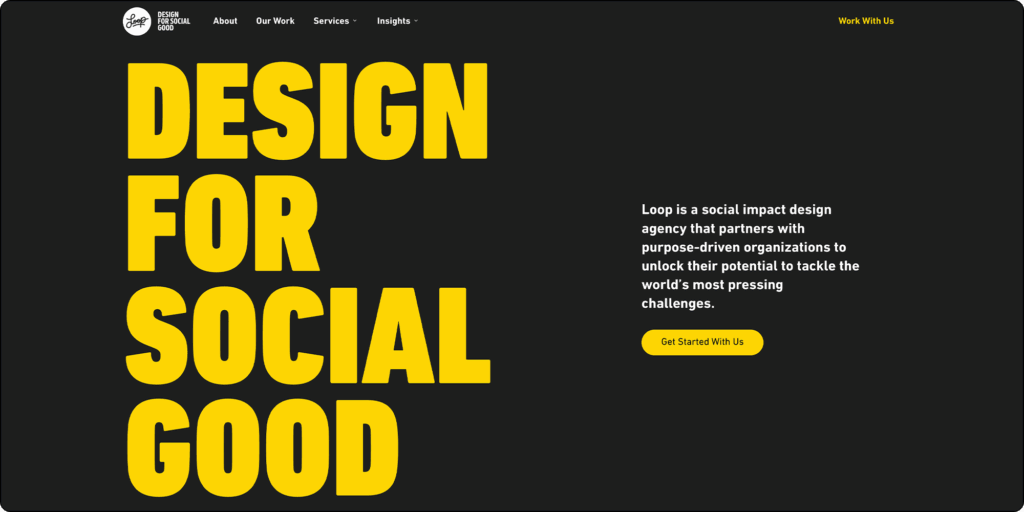
5. Loop

The Loop website homepage

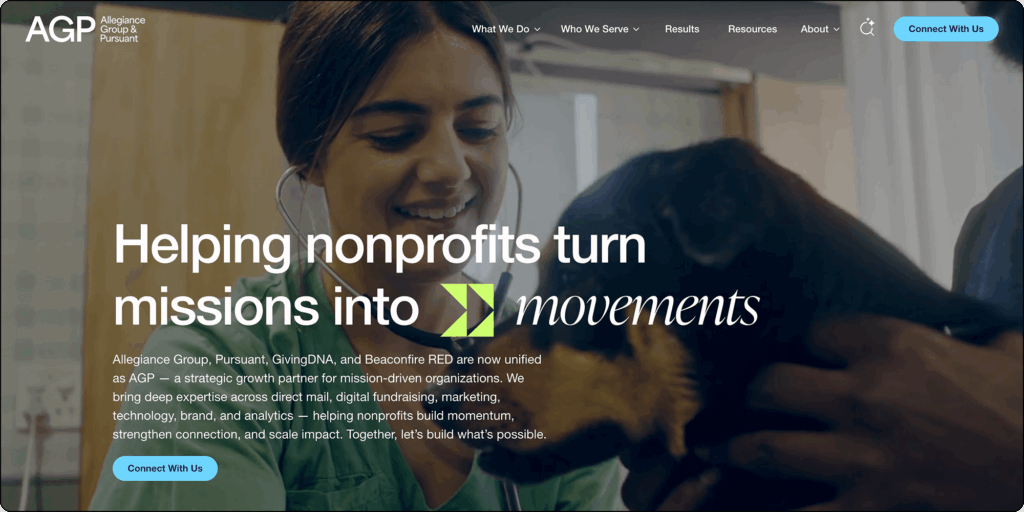
6. Allegiance Group + Pursuant

The AGP website homepage
  • Clients served: Large nonprofits and fundraising organizations.
  • Services provided: Digital fundraising strategy, marketing, and web development.
  • Key differentiator: Offers deep integration of web design with omnichannel fundraising and donor analytics.
  • Notable clients: RAINN, League of Women Voters, New Jersey School Boards Association   

7. Firespring

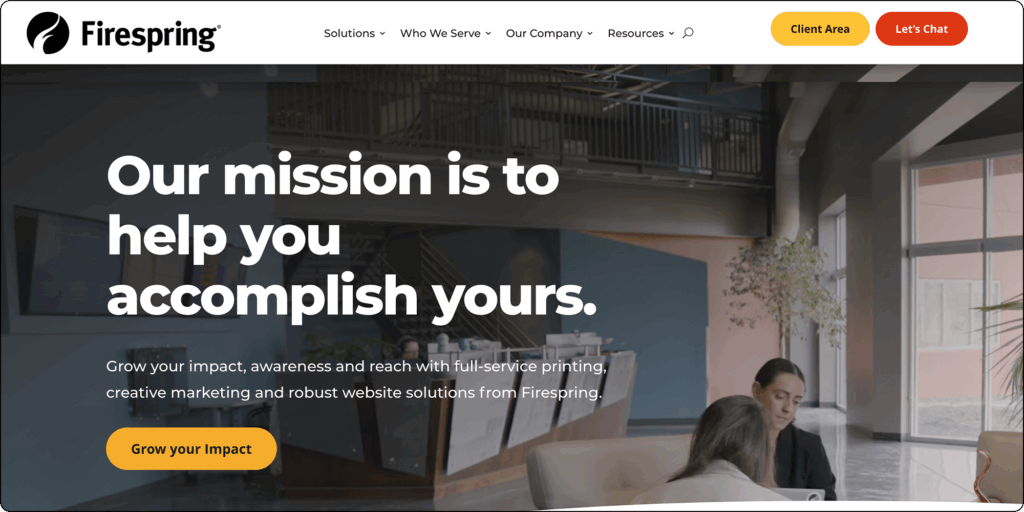
The Firespring homepage

8. Cornershop Creative

9. Constructive

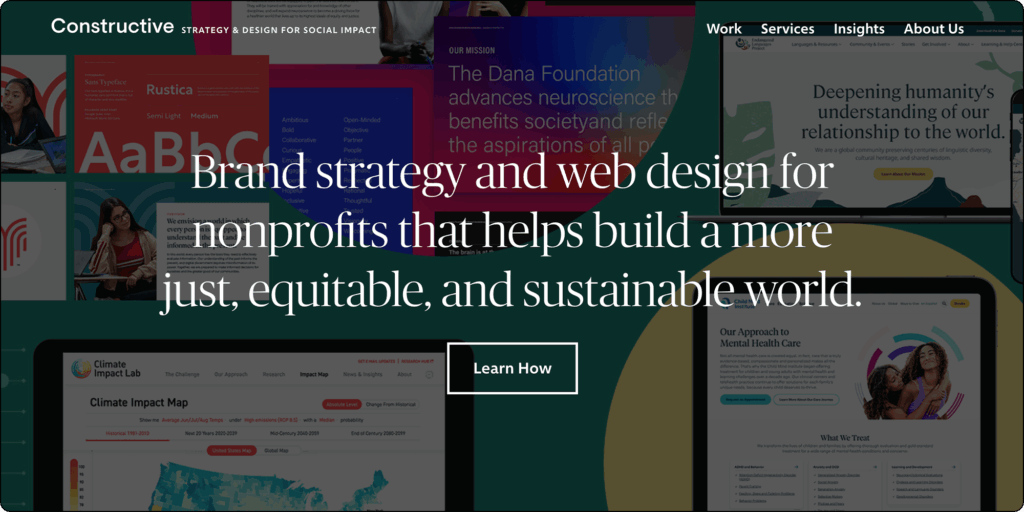
The Constructive website homepage
  • Clients served: Social impact organizations and think tanks.
  • Services provided: Brand strategy, UX design, and digital platforms.
  • Key differentiator: Focuses on bridging the gap between brand strategy and highly interactive, complex web content experiences.
  • Notable clients: Endangered Languages Project, St David’s Foundation, Plan USA   

10. Fifty & Fifty

The Fifty & Fifty homepage

11. Mighty Citizen

The Mighty Citizen homepage
  • Clients served: Mission-driven organizations, associations, higher education, and government.
  • Services provided: Branding, marketing, and web design.
  • Key differentiator: Utilizes deep, data-driven user research and audience segmentation prior to the design phase.
  • Notable clients: Long Center, United Way For Greater Austin, Bipartisan Policy Center   

Nonprofit web design provider FAQs

Navigating the web design landscape requires an understanding of costs, platform choices, and compliance standards. Review these frequently asked questions to make informed decisions for your organization’s digital presence.

How much does a nonprofit website cost?

Initial financial investments for nonprofit web design vary widely depending on your specific functional requirements. Standard redesigns for emerging community groups often start in the moderate five-figure range, while sprawling enterprise migrations frequently exceed six figures.

Effective financial planning requires treating your website as an evolving digital product. Establish a dedicated annual budget for continuous iterative improvements and ongoing support following the initial launch.

What is the best CMS for a nonprofit website?

Open-source platforms generally offer the greatest long-term structural flexibility for nonprofits. With an open-source CMS, your nonprofit can build custom functionality and maintain full control over your website’s source code, allowing you to migrate to a different site host or web development provider with ease. Open-source platforms also tend to have highly rigorous security standards, which are essential for nonprofits that need to protect sensitive donor and beneficiary information.

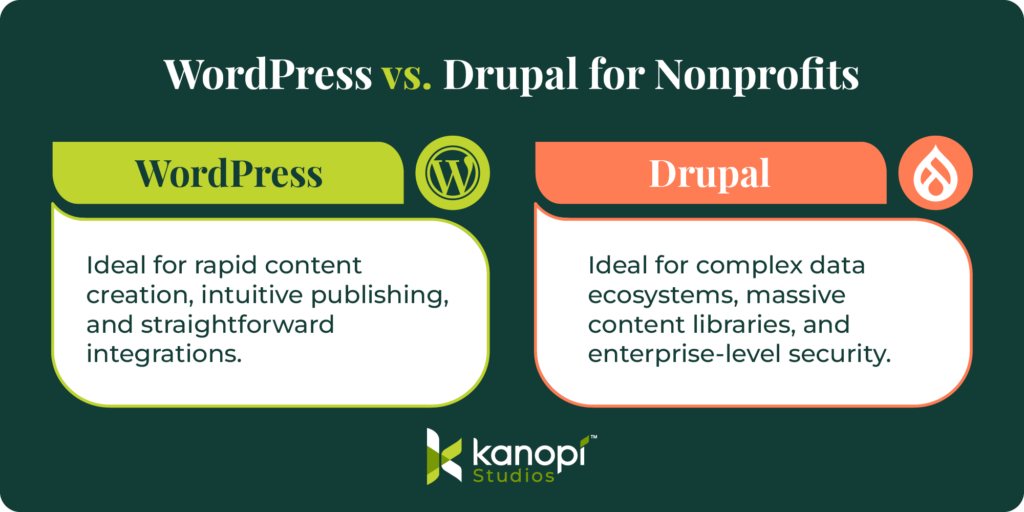
Two of the best open-source CMS platforms for nonprofits are WordPress and Drupal. WordPress excels at rapid content creation and straightforward digital publishing tasks, whereas Drupal dominates complex data ecosystems and offers robust security.

WordPress vs. Drupal for nonprofits

Do web design agencies help with nonprofit accessibility compliance?

The best digital partners integrate accessibility directly into the foundational site architecture. They test color contrast and screen reader compatibility well before the public launch to ensure total digital inclusion.

To maintain strict WCAG AA compliance over time, schedule comprehensive accessibility testing every six months. Use automated scanning tools to catch basic errors, and also require manual human testing to ensure no issues fall through the cracks. 

Why do nonprofits need custom web design over templates?

Pre-built templates offer convenience and speed if you want to get a nonprofit website up and running quickly, but they come with serious drawbacks. For example, they can slow down your website’s loading speed due to unnecessary code. They also come with structural limitations, meaning you have fewer opportunities to customize your site to your exact needs. 

On the other hand, custom web design lets you build a digital platform tailored to your specific needs and goals. This web design strategy is highly scalable, allowing you to easily expand your website as your organization grows. Plus, you can build tailored user journeys for specific segments of your nonprofit’s audience. For example, you can seamlessly guide a first-time volunteer down a path completely different from that of a major legacy donor.

Partnering with Kanopi Studios

Kanopi Studios provides ongoing technical strategy, enterprise CMS solutions, and baked-in accessibility to support your nonprofit’s long-term website health. By combining deep audience research with expert web engineering, Kanopi builds secure, user-focused digital presences on open-source platforms like Drupal and WordPress. 

Kanopi creates compelling user experiences that convert casual visitors into dedicated donors, volunteers, and ambassadors for your cause, whether your organization requires:

  • A complete website redesign
  • Complex multi-site architecture managing hundreds of regional chapters
  • Dedicated lifecycle support 

Learn more about how Kanopi approaches ongoing website support beyond just security patches:

Additional resources

Four students study at a table with laptops and notebooks

Strategic website support: how higher ed teams do more with less

Like most of us, higher education marketing teams are being told they must ‘do more with less’ increasingly often. 

Perhaps the most frustrating thing about that phrase is that each time you hear it, the harder it gets to actually achieve. For teams that are already lean and often running on fumes as it is, it can seem like there are no realistic or reliable ways to make it happen.

However, our years of experience with higher education clients have shown us one way that teams can do more with less not just today, but every time they receive that soul-crushing mandate in the future.

It’s called Continuous Website Improvement, a.k.a. ongoing support

When it’s done correctly, your site stays relevant and high-performing for years without the expenditure of a full redesign and rebuild. And it’s the reason many of our clients’ websites regularly last 10 years or more.

Website support should always help move your website forward.

Of course, support needs to handle the fundamentals:

  • Security updates
  • Module and plugin maintenance
  • Performance monitoring
  • Accessibility fixes 

All of this needs to happen consistently and carefully. But a well-maintained website can still be hard to use. It can still have confusing navigation. Prospective students can still end up lost and confused when they’re just trying to find the right program information or the right person to contact.

Therein lies the real opportunity: using ongoing support to make the site better over time, with manageable work that clearly connects to what your users need.

This typically includes:

  • Improving key user journeys
  • Refining navigation and content structure
  • Testing and improving conversion paths
  • Addressing accessibility issues over time
  • Updating templates as needs change
  • Cleaning up confusing or outdated content
  • Making key pages and calls to action easier to use

In other words, practical progress that reflects the reality most higher ed teams are living in.

Small bites create big wins.

We’ve seen departments make significant improvements through targeted, small projects and ongoing support. This gives teams a way to get a useful, well-built site live without having to wait for huge budget approvals or total alignment.

At the University of California San Francisco (UCSF), many sites launched under $50K and continued to improve through structured support.

Here are some examples:

  • The Memory and Aging Center redesigned their site, then used ongoing support to improve usability and performance. This made critical information easier to find for patients and researchers.
  • The Department of Urology spent over a decade making incremental improvements before evolving into a full rebuild, ensuring every step delivered value along the way.
  • The Seligman Lab launched a focused, research-driven site for under $7K, then used support hours to evolve it as their needs grew.

In practice: how higher ed websites improve through Kanopi support.

University of Michigan

For clients like the University of Michigan School of Information, our work doesn’t stop at launch. Ongoing support means page designs evolve, content gets easier to find and editorial workflows keep improving. Large teams can manage complexity more confidently without waiting for a full redesign every time something needs to change.

UC Berkeley

University teams move faster when support remains in place after launch. For clients like UC Berkeley, this kind of continuous partnership makes it possible to introduce real improvements to performance and accessibility. The team stops reinventing the wheel and starts actually moving forward.

College of Western Idaho

We’ve supported institutions like the College of Western Idaho long after launch, continuously refining how their site performs and how their team manages it as needs evolve.

Continuous improvement works — if you’re committed

Continuous improvement only works if there’s intention behind it. This is where many support models fall short. Without strategy, support inevitably becomes reactive. 

The best support models start with three questions: what matters most, how your team actually works and what needs to happen next. 

From there, it’s about executing consistently:

  • Clear priorities tied to your goals
  • Ongoing collaboration with your team
  • Regular checkpoints to assess what’s working
  • A backlog that balances quick wins with longer-term improvements
  • A realistic understanding of your team’s capacity

It’s not just about completing tasks. It’s about making continued progress.

Designed for teams under constant demand

If you’re managing a higher ed website today, you’re spinning a lot of plates at once:

  • Multiple interest-holders
  • Complex content structures
  • Accessibility requirements
  • Constant demand for updates

Strategic website support gives teams a way to keep moving without turning every improvement into a major project. It gives you flexibility when priorities shift and access to people who understand higher ed complexity. It also helps you decide what’s worth doing now, what can wait and what can be left as-is.

In practical terms, this means your team is better equipped to keep making progress where it counts:

  • Respond faster when priorities change
  • Improve the site without waiting for a full redesign
  • Make better decisions about time and budget
  • Keep accessibility from becoming an afterthought
  • Build improvements into the life of the site

After all, your website isn’t a one-time project. It’s infrastructure. It’s often the first place people go when they’re trying to decide whether your institution can help them.

Continuous improvement builds trust — and retains it

Your website doesn’t earn trust at launch. It earns it over time, every time someone finds the information they need and can act on it with confidence. That’s the value of continuous website improvement. It turns support into a steady practice of listening, adjusting and making your site easier for people to trust. For higher ed teams stretched thin, that kind of steady attention keeps your website aligned with the people who rely on it every day.

Kanopi Team

9 Best Healthcare Web Design Companies to Work With in 2026

Your healthcare or hospital website is the vital link connecting community members with the essential medical services they need to lead healthy lives. Your website is a critical launch point in the patient journey—studies show that over 60% of consumers use the web to choose a new healthcare provider or search for a service or care option, such as urgent care or imaging services.

Take a look at this example patient journey illustrating the key role healthcare websites play in transforming website visitors into patients:

Patient Journey

Step 1 of 4

Google

Search results for “best dermatologist…”

Ad • www.skindoc.com

Premium Skin Care Clinic

Board-certified experts. Book now.

TOP RATED

ClearSkin Dermatology

Rated #1 for patient satisfaction. Same-day appointments.

★★★★★ (2,847 reviews)
ClearSkin
ServicesAbout

Your Skin Deserves Expert Care

We combine medical excellence with a luxury patient experience.

📅 Schedule Consultation

Complete Your Booking

Selected Service:
General Dermatology Consultation
Time:
Tuesday, Oct 14 at 10:30 AM

However, your organization might not have the capacity or expertise to turn your digital home into a comprehensive resource that effectively serves your community. Working with a healthcare web design company can provide the support you need to continue delivering high-quality online experiences to your audience. 

This guide compares the top healthcare web design agencies to help your healthcare organization find the right fit for your digital needs, covering:

9 Best Healthcare Website Agencies to Partner With

CompanyBest ForTarget Audience
Kanopi StudiosHigh-touch, mission-driven partnershipUniversity medical departments, health foundations, and specialized health networks
Design de PlumeInclusivity-powered designHospitals and health centers seeking inclusive, community-driven communication
ModeaDigital “front door” engineeringLarge-scale hospitals, healthcare systems, and payors
Hedy & HoppPrivacy-first marketingMulti-location providers, health plans, and hospitals needing proven ROI
Intrepy MarketingPrivate practices and surgical centersSpecialty medical practices (Orthopedics, Med Spas, etc.) and solo providers
Windmill StrategyMedical device and life science companiesB2B MedTech and life science manufacturers
Practice BuildersData-driven practice growthPrivate clinics, urgent care centers, and dental/specialty providers
Supreme OptimizationTechnical life sciences and biotechScience-heavy companies in life sciences, pharma, and health tech ecosystems
RainCastleBiotech branding and investor designBiotech startups and established life science brands

1. Kanopi Studios

Kanopi Studios' website homepage

Location: Kanopi operates remotely, with a team spread across North America. 

Best For: A high-touch, mission-driven partnership

Target Audience: University medical departments, health foundations, hospitals, and specialized health networks

Services Overview: Kanopi’s healthcare web design services are built on a philosophy that medical websites should be easy for everyone to use, from patients to content editors to healthcare providers. The Kanopi team prioritizes intuitive user interfaces, accessible functionality and content, and mobile-friendliness. Additionally, every healthcare website Kanopi builds is fully HIPAA- and at least WCAG 2.1 AA-compliant

Key healthcare web design services include: 

  • Research and strategy: Every web project starts with discovery and research for a deep understanding of your target audience. This ensures that your website speaks to your users’ needs, no matter who they are. 
  • Design, user experience, and content: Kanopi creates engaging, accessible, and user-friendly healthcare content that simplifies the visitor experience and deepens audience relationships. 
  • Web development: Kanopi’s engineers bring your website to life with essential features and functionality, from online patient portals to location maps.
  • Web support: The Kanopi team partners with you to drive long-term success, continually enhancing your website with security updates, feature upgrades, and revitalized navigation.

Here’s a snapshot of how Kanopi approaches patient-first design for healthcare clients. We turn messy user interfaces into clean, engaging, patient-first digital experiences. 

Before & After UX Slider

The Power of Patient-First Design

✚ CareFirst
Services • Doctors • Portal • Contact

Your Health Journey,
Simplified

Access records, book doctors, and manage care from any device.

Book Appointment →
👨‍⚕️
Modern UX
🏥 GENERAL MEDICAL GROUP INC. Login | Register | Search
⚡ FLASH SALE: 20% OFF WELLNESS CHECKS – CALL NOW! ⚡
Quick Links

• Bill Pay
• Locations
• Careers
• Staff Info
• PDF Forms
Welcome to our Portal
Please call our office to request a PIN.
Support
Live Chat Offline.
Legacy UI

← Drag the slider to compare layouts →

Plus, 97% of Kanopi’s clients return year over year, demonstrating the team’s lasting commitment to digital healthcare success. 

2. Design de Plume 

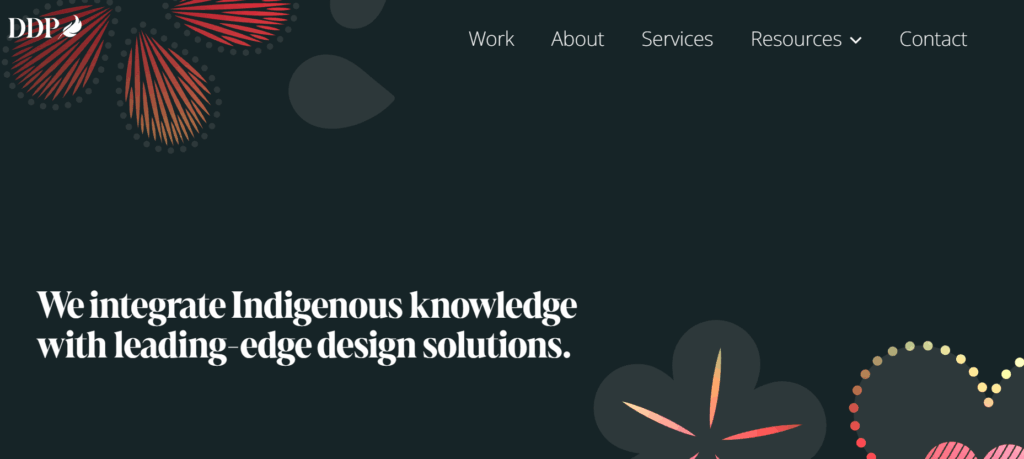
Design de Plume's website homepage

Location: Canada and the U.S.

Best For: Inclusivity-powered design

Target Audience: Hospitals, health centers, and public sector organizations that serve diverse or vulnerable communities.

Services Overview: Design de Plume’s services are fueled by a commitment to inclusivity and honoring indigenous traditions. Their services include strategy, branding, website design, and campaigns. Some of their healthcare clients include the Johns Hopkins Center for Indigenous Health and the Maamwesying Ontario Health Team (MOHT).

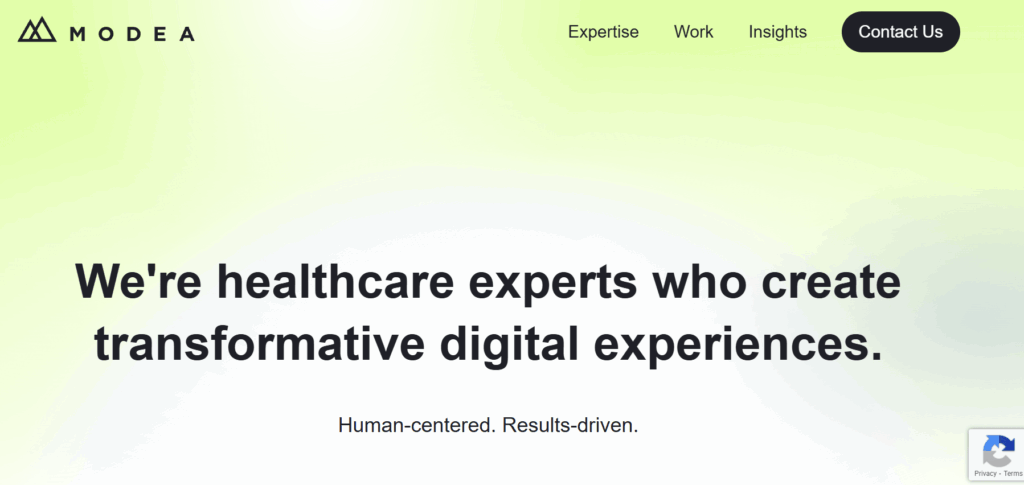
3. Modea 

Modea's website homepage

Location: Headquarters in Blacksburg, VA

Best For: High-end digital “front door” product engineering

Target Audience: Large health systems and payors seeking sophisticated digital consumer experiences.

Services Overview: Modea partners with healthcare organizations to build and optimize their online resources. Their services include digital strategy, UX design, web development, electronic health record (EHR) integration, and HIPAA compliance. Their work has helped clients increase website conversions, site speed, and digital revenue.

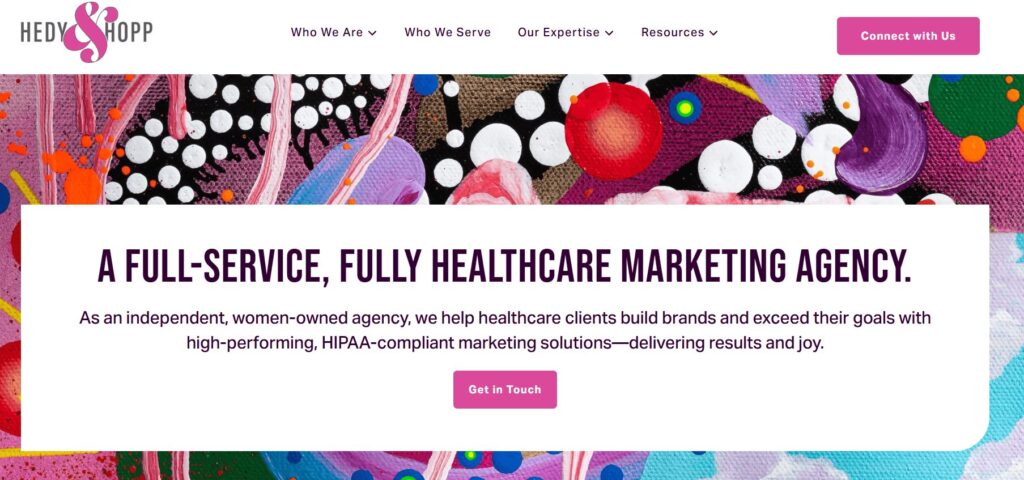
4. Hedy & Hopp

The Hedy & Hopp website homepage

Location: Remote operations

Best For: Privacy-first marketing and HIPAA-compliant attribution

Target Audience: Large health systems, payors, and multi-location providers who need to prove marketing ROI.

Services Overview: Hedy & Hopp is a full-service digital marketing agency for healthcare organizations. They can step in at any point to support healthcare websites, whether they need a full rebuild or optimization. They can also build a robust marketing strategy that sets up your healthcare organization for long-term growth. 

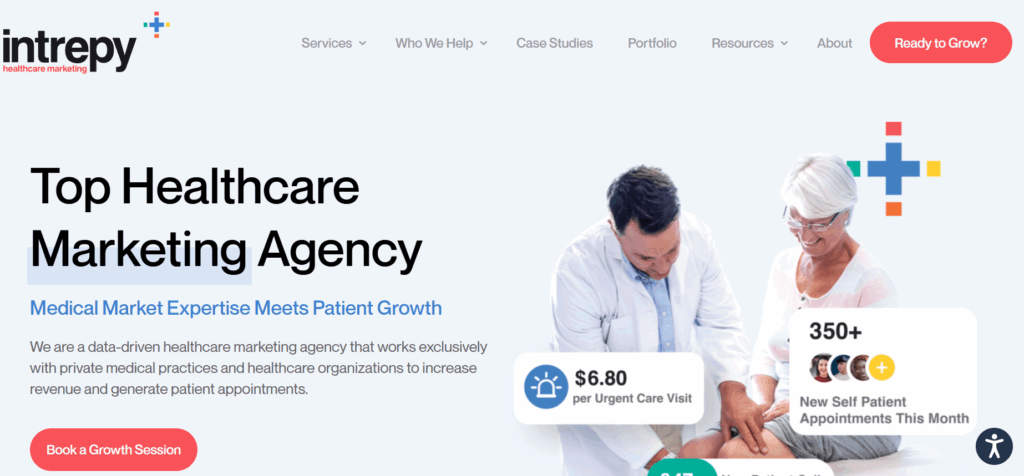
5. Intrepy Healthcare Marketing

The Intrepy website homepage

Location: Based in Orlando, FL.

Best For: Private practices and surgical centers

Target Audience: Medical practices and solo providers

Services Overview: Intrepy takes a data-driven approach to healthcare marketing, leveraging real-world experience to provide tailored services that healthcare organizations need. Their services include medical SEO, web design, video production, paid advertising, and more. Clients have seen increases in organic website traffic and appointment booking after working with Intrepy. 

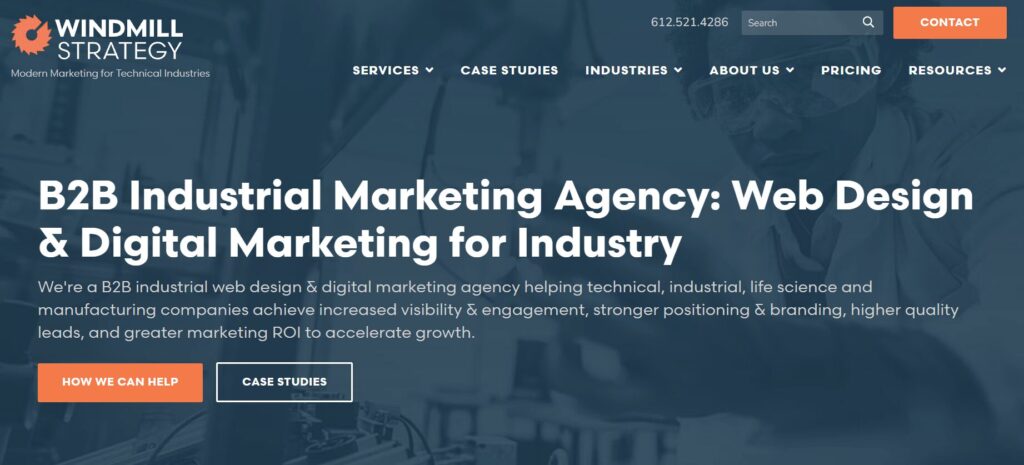
6. Windmill Strategy

The Windmill Strategy website homepage

Location: Based in Minneapolis, MN, with clients across the U.S. 

Best For: Medical device and life science companies

Target Audience: B2B MedTech

Services Overview: Windmill Strategy provides digital marketing services to B2B marketers with complex offerings. They help medical businesses establish leadership in their sector, showcase their offerings more effectively, and generate leads. They also build websites for life sciences organizations that speak to many audiences, from healthcare professionals and scientists to patients. 

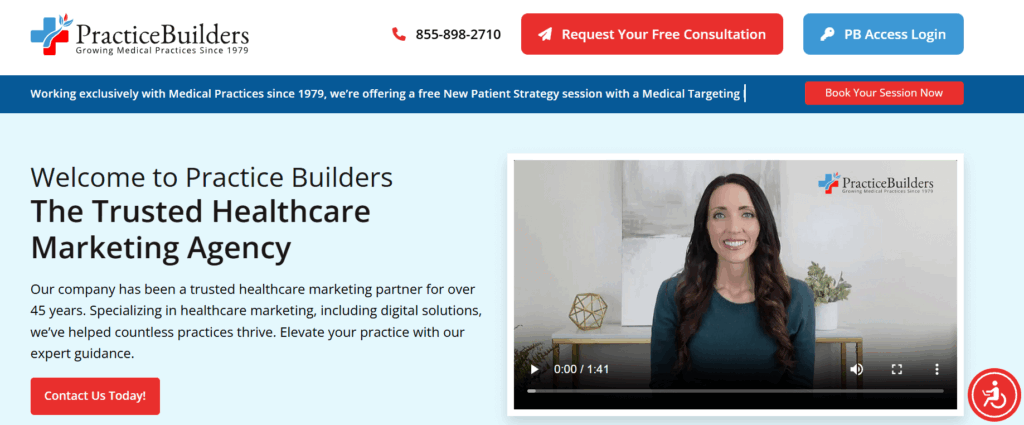
7. Practice Builders

The Practice Builders' website homepage

Location: Headquarters in Durham, NC

Best For: Data-driven practice growth 

Target Audience: Small-to-medium size clinics

Services Overview: Practice Builders has been in the healthcare digital marketing space for over 45 years. They help practices grow through web design, reputation management, SEO, and social media marketing. Their clients range from medical offices to dental practices and other specialties. 

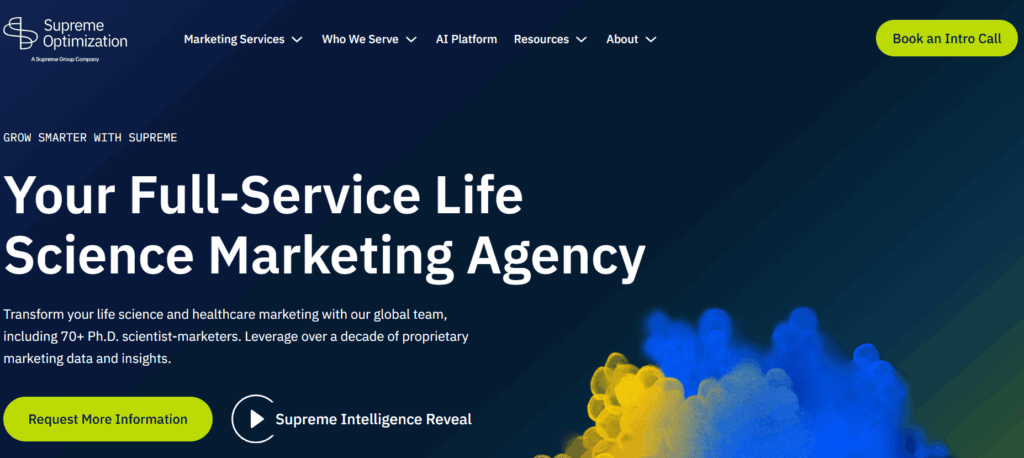
8. Supreme Optimization

The Supreme Optimization website homepage

Location: Remote/global capabilities

Best For: Technical life sciences and biotech

Target Audience: Scientific organizations needing Ph.D.-level strategists to communicate complex healthcare or life science products.

Services Overview: Supreme Optimization is a full-service marketing agency for life science organizations. Their global team includes 70+ Ph.D. scientist-marketers, ensuring they have deep knowledge of life science topics. Their team helps orgs maximize their ROI through smart UX and data-driven intelligence. 

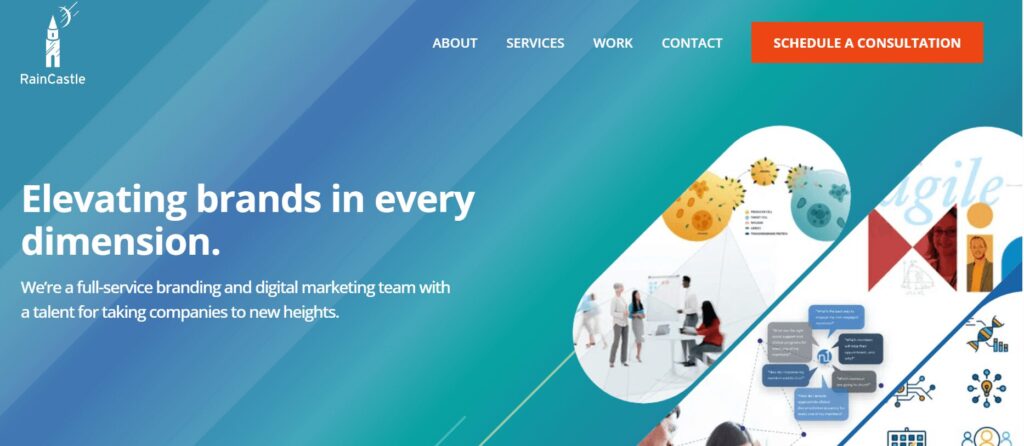
9. RainCastle Communications

The RainCastle Communications website homepage

Location: Headquarters in Needham, MA

Best For: Biotech branding and investor-focused design

Target Audience: Biotechnology

Services Overview: RainCastle Communications builds B2B websites for life sciences, healthcare technology, and professional services. They take a strategic approach to web optimization, from thoughtful discovery and design to ongoing optimization. Their industry expertise allows them to achieve strong results while reducing risks. 

Top Healthcare Web Design Companies: FAQs

How does healthcare web design differ from standard web design?

Healthcare sites face significantly higher stakes than other sectors; they must balance complex regulatory compliance (HIPAA, ADA) with a patient-first UX that reduces anxiety and is easy to use for web visitors who are often stressed or in a hurry.

Why is industry-specific experience so important?

Experienced agencies already understand clinical workflows, medical SEO, and the specific trust signals needed to convert a visitor into a patient, so they don’t need to be brought up to speed on the ins and outs of your industry.

What is the average timeline for a healthcare website build?

Timelines depend on scope, but they generally range from a few months to significantly longer for enterprise-level organizations with complex integrations, such as EHRs and patient portals.

What are the non-negotiable compliance standards?

Any reputable agency must guarantee HIPAA compliance for data privacy and Web Content Accessibility Guidelines (WCAG) 2.1 Level AA accessibility standards.

How do agencies protect sensitive patient information (PHI)?

Top firms implement SSL encryption, secure data storage, and encrypted form submissions to ensure that any data transmitted, from appointment requests to bill pay, is protected from breaches.

What features do patients value most on a healthcare site?

Data shows that 94% of consumers prioritize easy navigation on the websites they use. Other essential healthcare site features include intuitive search, mobile-friendly appointment scheduling, provider directories, and secure patient portals.

Why is mobile-first design critical in healthcare?

With over 64% of web traffic originating from mobile phones, patients need to be able to find directions or book care while on the go, often while juggling other stressful tasks like childcare and jobs. That means a mobile-friendly interface is critical to help them complete essential tasks.

How is accessibility handled for diverse patient needs?

Agencies should follow WCAG guidelines by creating designs that facilitate keyboard navigation, provide high color contrast for the visually impaired, are screen reader compatible, and offer clear, jargon-free content.

How much does a professional healthcare website cost?

Pricing varies widely based on the number of pages, custom features (such as telehealth integrations), and the level of ongoing support required.

How can we measure the ROI of a new website?

A top-quality agency will track specific metrics such as increases in new patient inquiries, online appointment bookings, and improved search engine rankings for key medical terms. You can use this data to evaluate whether your site is serving your goals or whether you need to adjust your strategy to improve outcomes.

How to Choose the Right Service Provider for Your Needs

  1. Ensure specialty alignment. If your healthcare organization requires specialized functionality, ensure the web design provider you work with can accommodate your needs. For example, a pediatric care clinic needs a balance of professional trust for parents and a friendly, approachable aesthetic. This often requires multilingual content options and quick links for vaccine schedules or dosage charts.

💡 Pro Tip: Ask for a “Design Persona” review. A provider should be able to explain how their design choices specifically appeal to both the logical needs of a parent/patient and the emotional comfort of the user.

  1. View portfolios. Explore case studies and client stories from potential providers to see whether their services and deliverables align with your requirements. Verify that their past work includes high-quality medical imagery and engaging video storytelling. Also, browse their past projects on a mobile device to ensure complete mobile compatibility. 

💡 Pro Tip: Don’t just look at the homepages. Navigate to a deep resource page on your phone (e.g., a dosage chart or provider directory). If you have to pinch and zoom to read it, they aren’t truly mobile-optimized.

  1. Ask for references. Don’t just take their word for it—ask potential agencies for references from past clients so you fully understand their approach with healthcare providers. For instance, you may ask a reference, “How did the agency handle situations where a timeline needed to be extended due to a new compliance requirement?”

💡 Pro Tip: Ask this exact question: “Can you describe a time this agency caught a compliance or security risk before you did?” This reveals whether they are proactive partners or just order-takers.

  1. Verify HIPAA compliance and security standards. Ensure the provider you choose complies with digital HIPAA guidelines and offers top-level security standards. Confirm they implement multi-factor authentication (MFA) for all logins, SSL encryption for every form, and secure off-site backups.

💡 Pro Tip: If a provider says, “Our hosting is HIPAA-compliant, so your site is too,” keep looking. HIPAA compliance requires specific encryption at the application level (how the forms handle data), not just where the files are stored.

  1. Ensure custom accessibility. Ensure custom accessibility. Your web design partner should be able to tailor your site’s accessibility to your unique audience. For example, if your organization serves populations with low vision and blindness, your web provider should be able to build your website to accommodate these needs, including high color contrast, audio descriptions, and other essentials. 

💡 Pro Tip: Ask for an accessibility audit report from a previous project. If they can’t produce one, they likely aren’t testing for screen readers or low-vision users.

  1. Ask about EHR integration. Ask specifically if they have integrated with your exact EHR system, such as Epic, Oracle Health, PracticeSuite, or athenaOne, as the technical lift varies significantly between platforms. Ensure they can seamlessly link to or embed patient portals so users can access test results and medical history without a confusing login experience.

💡 Pro Tip: Integration isn’t “one size fits all.” Ask: “Do you use a native API integration for [Epic/Oracle], or are you just skinning an external login page?” The latter often leads to a disjointed user experience.

  1. Explore support options. Determine the level of ongoing support your provider will offer your organization to ensure continued success. Ask about their guaranteed response time for critical security patches versus general content updates.

💡 Pro Tip: Distinguish between “Response Time” (we saw your email) and “Resolution Time” (the bug is fixed). Ensure your service-level agreement (SLA) defines both for critical security patches.

  1. Inquire about results tracking. Evaluate how providers measure website performance and report back to clients. Beyond traffic, they should track online appointment booking rates, newsletter sign-ups, and the “Success Rate” of your internal search bar.

💡 Pro Tip: Ask them to set up “Conversion Funnels” that track how many visitors to a service page actually complete an “Appointment Request” form.

Wrapping Up

Finding the right web design provider for your healthcare organization is as much about relationship building as it is about wireframes and branding strategies. When you can find an agency that truly cares about your organization, deeply understands its needs, and is devoted to its success, you can build an online presence that furthers your healthcare mission. 

For more information, check out these additional healthcare web design resources:

Kanopi Team

More Hands, More Impact: A Guide to Web Staff Augmentation

Maintaining a strong website requires precision, collaboration, and expertise, from safeguarding data to ensuring accessibility and compliance with industry regulations. For many mission-driven, healthcare, and corporate teams, hiring an outside agency for a large website build can feel risky, especially if past experiences led to sites that didn’t meet their needs or felt disconnected from their mission. Their biggest fear is that they’ll end up with a site built in a way their internal team won’t be able to edit, support, or extend on their own.

To avoid these challenges, many organizations turn to staff augmentation to get the support they need while retaining control of the development process. It allows internal teams to maintain their autonomy while gaining the extra hands or niche expertise—like Drupal development or ADA compliance—needed to bring a website to life.

This guide explores the benefits of staff augmentation for website support and how Kanopi Studios integrates with your team to help you achieve your most ambitious digital goals.

What is staff augmentation for web teams?

Staff augmentation is an outsourcing strategy in which an organization temporarily hires external specialists to supplement its in-house web design, development, and marketing team.

4 key benefits of the staff augmentation model

Instead of outsourcing an entire project, staff augmentation provides targeted support where it’s needed most, whether that’s design, development, accessibility, or ongoing maintenance.

It’s a model that offers important benefits for teams, allowing them to:

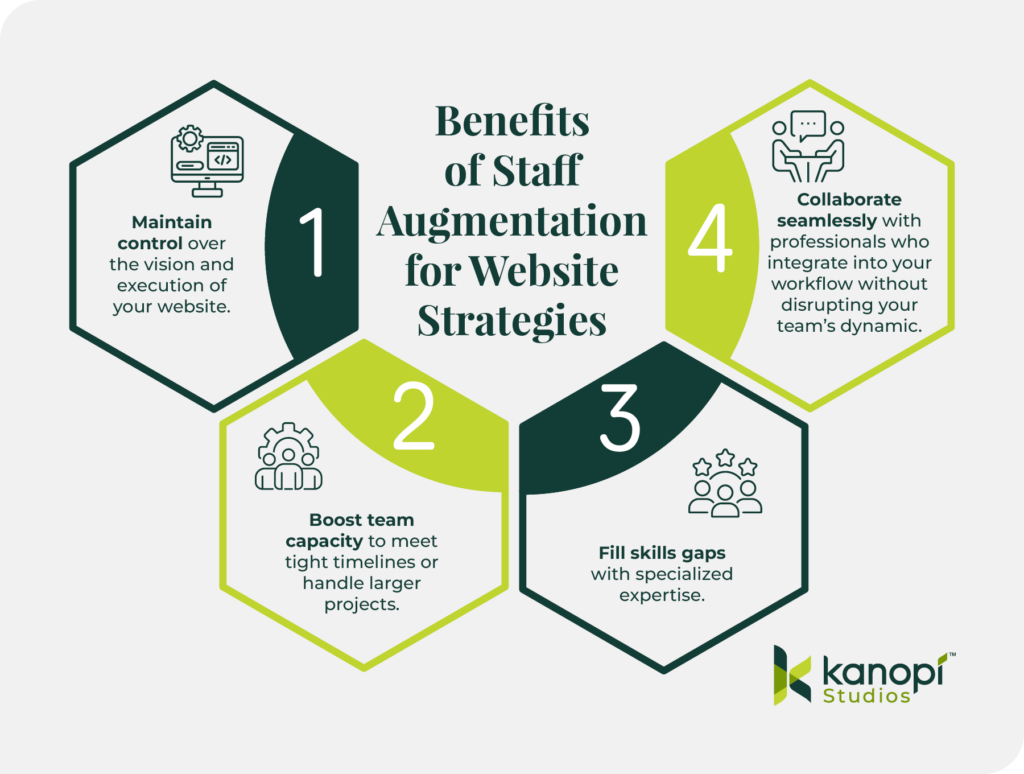
Benefits of staff augmentation for website strategies, listed below
  • Maintain control over your website’s vision and execution.
  • Boost team capacity to meet tight timelines or handle larger projects.
  • Fill skills gaps with specialized expertise, such as compliance with ADA accessibility standards or HIPAA regulations.
  • Collaborate seamlessly with professionals who integrate into your workflow without disrupting your team’s dynamic.

At Kanopi, we’ve been offering staff augmentation and support for years, assisting clients under pressure to deliver high-quality websites that serve users, staff, and stakeholders alike.

How Kanopi Studios integrates with in-house teams

Kanopi’s web specialists understand the stress created by aggressive timelines, resource constraints, and knowledge gaps. “Nimble” is one of our core values, and offering seamless staff augmentation is one of the many ways we embody it. We’ve successfully partnered with clients and other agencies to help them achieve their website goals. We love the challenge of blending our skills with client teams to help your internal staff perform heroic feats for your end clients.

Here are a few examples of ways we’ve supported clients and their in-house teams:

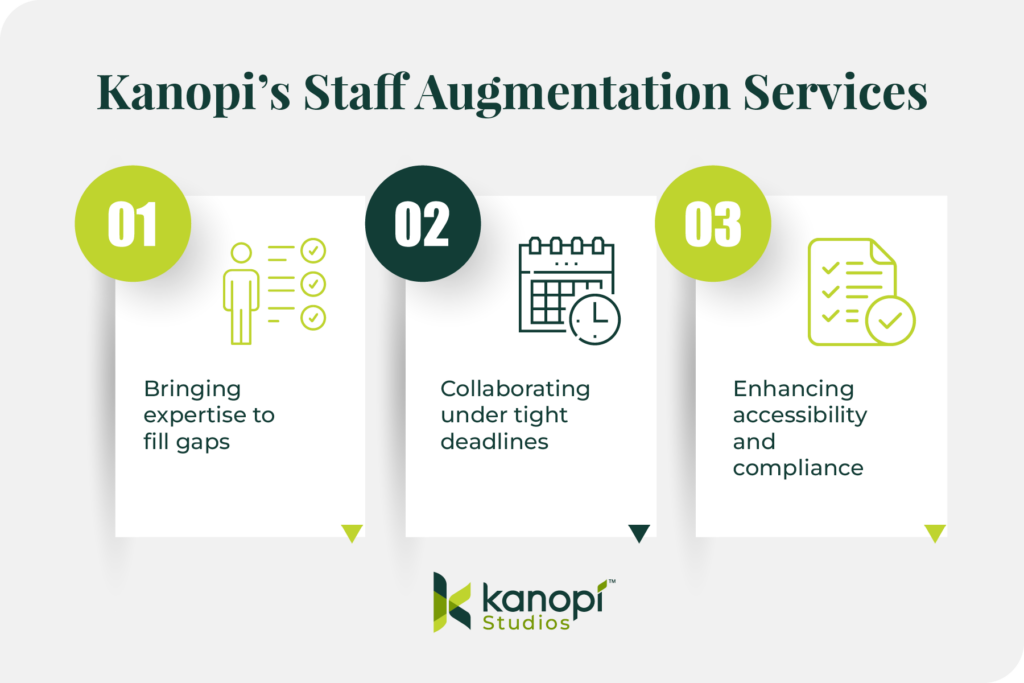
Kanopi’s staff augmentation services (listed below) 
  • Bringing expertise to fill gaps: A Fortune 50 company brought us in to develop custom Drupal modules, create secure API integrations for PPI compliance, assist with designs, keep projects on track, meet deadlines, and maintain high-quality standards.
  • Collaborating under tight deadlines: When a hospital system’s in-house team was stretched thin during a major redesign, we stepped in to handle development work. We delivered on time while staying aligned with the team’s goals.
  • Enhancing accessibility and compliance: A nonprofit provider needed updates to ensure its site met accessibility and HIPAA compliance standards. Our specialists joined their internal team to address gaps, ensuring the site was compliant, user-friendly, and patient-focused.

Examples of staff augmentation for website support

Through our robust website support services, we assisted the following organizations and their in-house marketing and web strategy teams. 

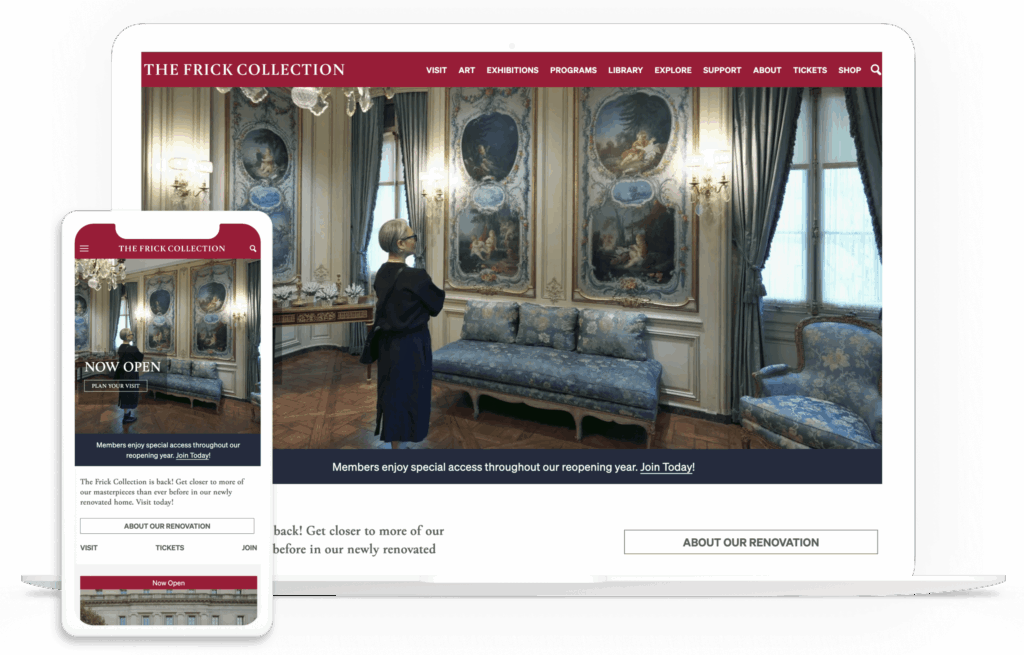
The Frick Collection

The Frick Collection website homepage on a mobile device and a desktop screen

The Frick Collection is a world-renowned museum and cultural institution located in New York City. The Frick website was suffering from outdated digital architecture and a rigid user experience. 

We worked with the Frick Collection team to help them:

  • Migrate to a newer version of Drupal
  • Implement WCAG 2.1 AA compliance
  • Modernize the media uploading process

As a result, the Frick team can now manage their website much more efficiently, with simplified landing pages, enhanced workflows, and strategic automation. 

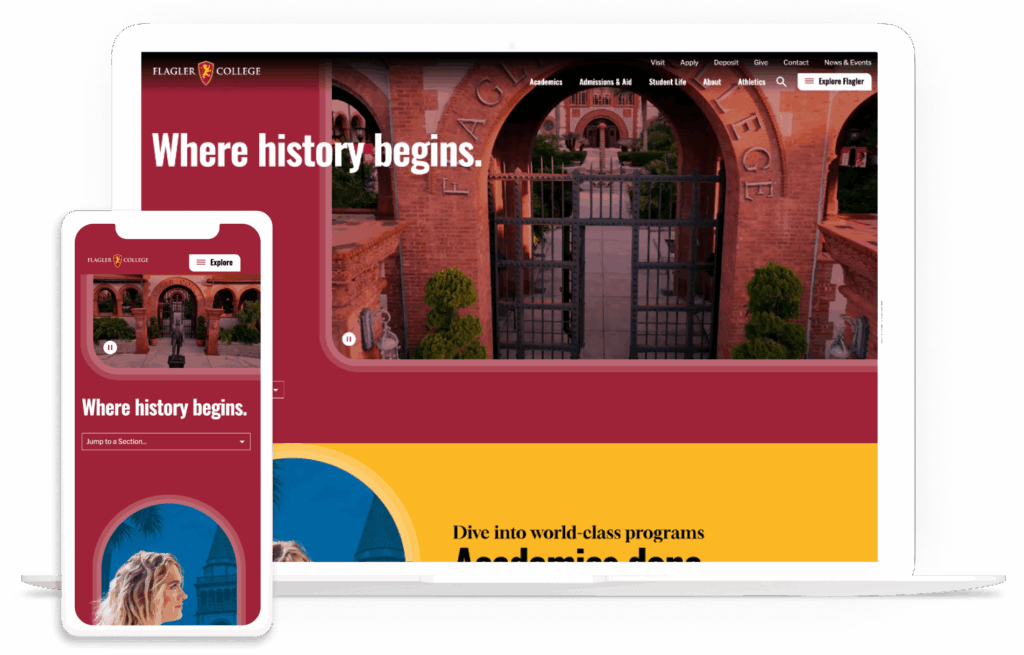
Flagler College

The Flagler homepage on a mobile device and a desktop screen

Flagler is a liberal arts college in St. Augustine, Florida. The Kanopi team conducted discovery work with Flagler and found that users were confused by the navigation experience and struggled to find information about programs and financial aid. 

By collaborating closely with Flagler, we were able to: 

  • Enhance storytelling through visual cues like animations and color changes to highlight essential information
  • Improve the internal search experience with a user-friendly interface
  • Define clear user journeys using content that encourages exploration and engagement

Now, Flagler’s website has a fresh, modern design with improved page load speeds and navigation, creating a positive experience for all visitors. 

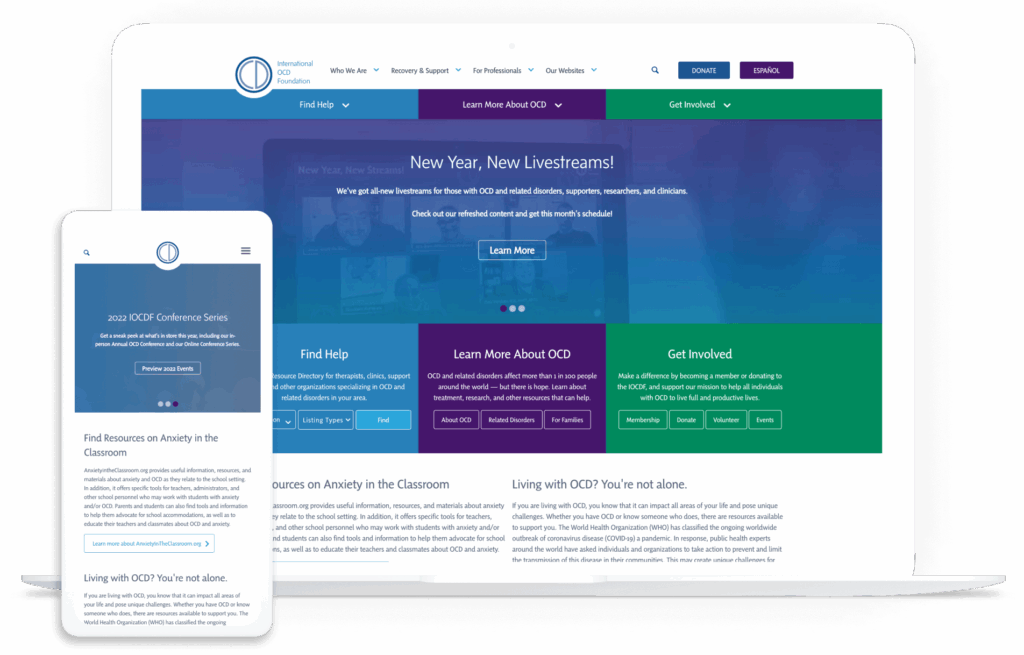
International OCD Foundation (IOCDF)

The IOCDF homepage on a mobile device and a desktop screen

The IOCDF supports people with obsessive-compulsive disorder (OCD) by connecting them to resources and conducting research.  The team at IOCDF wanted to expand their website’s services and modernize their resource directory to better serve their audience. 

Through our partnership with the IOCDF, we were able to: 

  • Create a new, dynamic, scalable directory with a completely updated user journey
  • Develop an interactive map to clearly display information about programs and therapists
  • Empower the IOCDF team to update content quickly, easily, and independently moving forward

Our collaborative approach led to a website that gives both visitors and the IOCDF team a smooth user experience. 

Is staff augmentation your best move? 

Take this short quiz to find the most efficient way to scale your team and meet your deadlines.

Is Staff Augmentation Right for Your Team?

Answer 6 quick questions to see if external expertise is the key to your next project’s success.

Next steps

Even with a dedicated internal team, there are times when an extra set of hands or a niche skillset makes all the difference. If you have the vision but lack the specific technical hours to execute, staff augmentation is your most efficient path forward. 

The Kanopi team is here to collaborate with your team, help you overcome resource challenges, and build a website that meets your current and future goals. Contact us if your latest project can use consulting services or assistance via our full spectrum of web services.

The Kanopi staff

How We Give Websites Unnaturally Long Life

We recently came across a very interesting blog post from our friends at Orbit Media on a subject we’ve actually wanted to cover for a while now: the average website lifespan. 

They discovered that the average lifespan is two years, one month. That’s it.

A low bar, indeed. 

They also point out that you can extend your website’s lifespan well beyond two measly years by following some established best practices. This is something we know about first hand here at Kanopi.

In fact, we’ve found that the websites we build for our clients regularly last 10 years or more. 

So what’s our secret sauce? It comes down to two things:

  • how we define support, and
  • how we provide that support.

Both of these are based on years of experience and focus on a complete process that leads to steady improvement and intentional growth. 

We focus on setting clear expectations from the start, ensuring clients understand the purpose, share our mindset, and are fully on board. It’s not just about making updates; it’s about bringing marketing, design, and development together so every change has a real impact.

In fact, it’s been a core part of how we work for so long that we see it as more than just a methodology. It reflects our mindset as an agency. And it’s the #1 reason the websites we build for our clients enjoy the longevity that they do.

If you’re curious to learn how we help clients build websites that last five times longer than the industry average, it starts with these steps:

We begin with both qualitative and quantitative research. Every project begins with qualitative and quantitative research. (If you’re unsure what the difference is or why both are equally important, check out this post.) The research we do informs our UX design and content strategy, ensuring optimal usability right from the outset — which results in fewer problems down the road and helps avoid premature obsolescence. This is why even when the budget we’re given is relatively small, we do as much research as possible with what we have. This step is far too important to omit.

We employ skilled, experienced professionals. Senior-level website designers and developers are capable of superior-quality work, faster problem-solving, and efficient project execution. This results in websites that remain performant, efficient, and relevant for years. By minimizing technical debt and ensuring adaptability, their experience and skill helps prevent costly rebuilds.

Also, we’ve found that full-time employees tend to have a more vested interest in client projects. So while we may occasionally complement our staff with contractors (who are also senior-level), our clients can trust that their projects will be handled almost entirely by full-time staff.

All the Kanopi staff, about 70 people, smiling at the camera for a group photo
The talented Kanopi staff

Support is not the same thing as maintenance.

The word ‘support’ in our industry has come to be synonymous with technical tickets and tasks. And notifying a help desk when there’s a problem with your site, and speaking with a technician to get the problem resolved, and then forgetting about them until you need them again.

Of course, this type of maintenance work is nonetheless important and we do provide it for our clients. But it has very little to do with how we define ‘support’ at Kanopi. 

For us, support is about making an ongoing investment to ensure optimal functionality at all times. Long-term support is critical after your site launches.

It’s more than making sure the code works and the add-ons and features don’t glitch. Instead, it’s a process that involves ongoing evaluation and iteration, where we continually ask questions like these:

User Experience & Accessibility

  • Have user needs evolved?
  • Is the website fully responsive and optimized for different devices and browsers?  
  • Are there any new accessibility standards or guidelines we need to implement?  

SEO & Content

  • Is the content current? Are we keeping things fresh, adding interesting new content and archiving/repurposing older content that’s no longer relevant?
  • Are we monitoring search trends and adjusting our SEO strategy accordingly?
  • Are we leveraging AI tools or automation to enhance SEO performance?

SEM & Paid Marketing 

  • Are our paid search campaigns (Google Ads, social media ads) optimized for ROI?
  • Are we testing and iterating on ad creatives and messaging for better engagement?
  • Are we using remarketing strategies effectively to re-engage visitors? 

Conversion & Engagement  

  • Are our landing pages optimized for conversions?
  • Are we A/B testing CTAs, headlines, and page layouts to improve engagement?
  • Are we analyzing user behavior to refine marketing strategies (e.g., heatmaps, scroll depth, click tracking)?

Brand & Positioning

  • Are we maintaining a consistent brand voice across all marketing channels?
  • Are we engaging with our audience through social media, email marketing, and community-building efforts?  

Scalability & Infrastructure  

  • Is our hosting environment still the best fit for our current traffic and resource needs?
  • Has the open source community recently invented or improved features that would enhance this website, or be a better fit than those we’ve previously implemented?
  • Are we monitoring uptime and performance metrics to prevent downtime?
  • Would implementing a CDN or other optimizations improve site speed?  

Automation & Workflow

  • Can any repetitive development tasks (e.g., updates, testing, deployments) be automated?
  • Are there any new integrations (AI-Search, APIs, CRM, analytics tools) that could improve efficiency?

Performance & Security 

  • Are all core, theme, and plugin/module updates applied and tested for compatibility?
  • Are there any deprecated functions or outdated dependencies that need refactoring?
  • Is the site loading efficiently (e.g., optimized images, caching, minimized scripts)?  
  • Are security best practices being followed, such as firewalls, backups, and malware scans?  

By revisiting these questions regularly, we ensure your digital presence continues to evolve with your users and the broader web landscape. And it helps us focus on what matters most: performance, usability and long-term value.

Conclusion (in convenient listicle form)

We didn’t actually set out to write this post as a how-to guide, but if you want to ensure your website enjoys unnaturally long life blessed with perpetual relevance, usability and neverending optimal results, these are the steps you’d need to follow:

  1. Do your homework; include both quantitative and qualitative analytics as part of your thorough research process.
  2. Entrust your strategy, design and development to the most deeply skilled, experienced team of professionals you can find. Bonus points if most of them are your full-time employees.
  3. Transform your definition of support from something that happens only when problems occur into a mindset of constantly looking for opportunities to enhance and improve every facet of your site.

Simply commit to these three steps with every fiber of your being and your website is guaranteed to exceed the average lifespan by a great many years. And if that seems overwhelming, you can always partner with an agency that demonstrates their passion for website longevity by writing lengthy blogs.

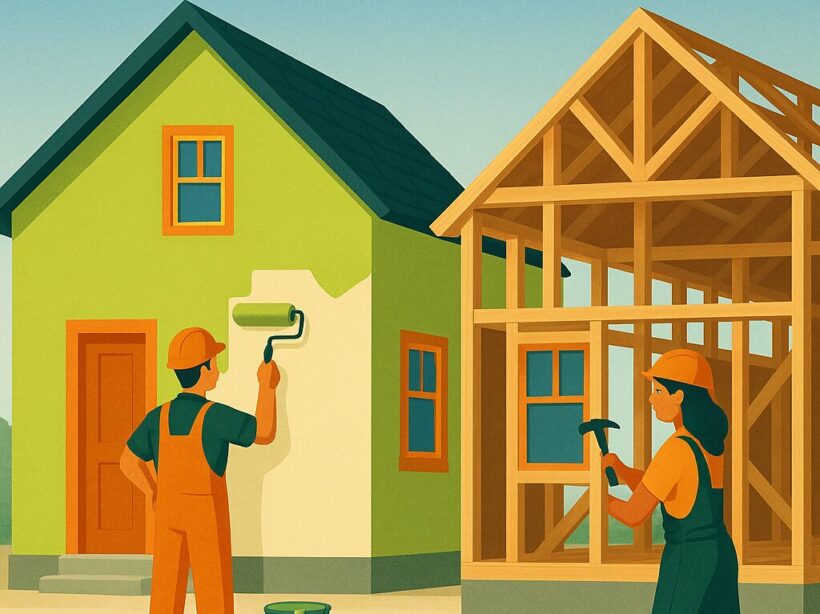
AI generated image of two houses side by side: one is getting a fresh coat of paint, while the other is being rebuilt from scratch.

Refresh or Rebuild: What Does Your Website Really Need?

So, you’ve noticed your website feels out of step. It looks dated. It’s hard to update. Or it just doesn’t reflect the heart of your mission anymore.

If you’ve noticed all this, your users probably have too. At this point you’re grappling with the eternal dilemma all website owners must eventually face:

Do you give it a fresh coat of paint, or start over from scratch?

As much as we’d love to ease your mind and give you a clear-cut answer, this is one of those cases where all we can offer is the frustrating yet accurate one: 

It depends. 

Because it all comes down to understanding what’s working, what’s not, and how you want your site to evolve.

When a refresh makes sense

Think of it like renovating a house. You’re not tearing down walls. You’re making the space work better for the people who use it. A refresh keeps your site’s foundation intact but updates the look and experience. 

This is usually the right approach when your site’s essential nuts and bolts are still in good working order, meaning:

  1. your CMS is still supported and stable (i.e. you’re already on WordPress or Modern Drupal)
  2. your content model is mostly holding up, and a visual and functional update are all you really need.

Common refresh improvements include:

  • Updating your site’s design to reflect your current brand  
  • Reworking layouts and menus so users can find what they need  
  • Improving conversion paths like forms or calls to action  
  • Making the site more accessible for all users (e.g. adding alt text, improving contrast, and enabling keyboard navigation)
  • Optimizing for mobile and faster load times  
  • Fixing SEO gaps or updating metadata structure to improve how your content is surfaced. 

The key benefit of a refresh is that you’re not starting from zero. You’re keeping what works and improving what doesn’t. It’s a practical, cost-effective way to extend the life of your site and make it easier to manage.

However, sometimes it just ain’t enough.

When it’s time for a full rebuild

Sometimes the site has deeper issues. The platform might be outdated. The backend may be difficult to manage. Or maybe your goals have grown and the site can’t keep up.

If you find yourself dealing with any of the following issues, a rebuild is usually the right call:

  • you’re using a platform that’s no longer supported  
  • the code is hard to maintain and full of legacy problems  
  • you’re introducing new features or changing how people engage with the site  
  • you need better integrations or personalization  
  • you keep fixing bugs without solving the real problems  
  • your team struggles to update or publish content

A rebuild means starting fresh. You get a clean codebase. You get to redesign the frontend and backend. Most importantly, it gives you a chance to truly rethink how the content is structured and how the site supports your goals.

It’s definitely a bigger investment that may require staff augmentation, but when done correctly, it sets you up for long-term success.

Which one is right for you?

If your platform is still working and your content mostly holds up, a refresh is often the better option. It’s faster. It costs less. And it improves the experience for your team and your users.

But if your site is slowing you down or holding you back, rebuilding may actually save time and money over the long run. A rebuild clears out technical debt and sets you up for real growth.

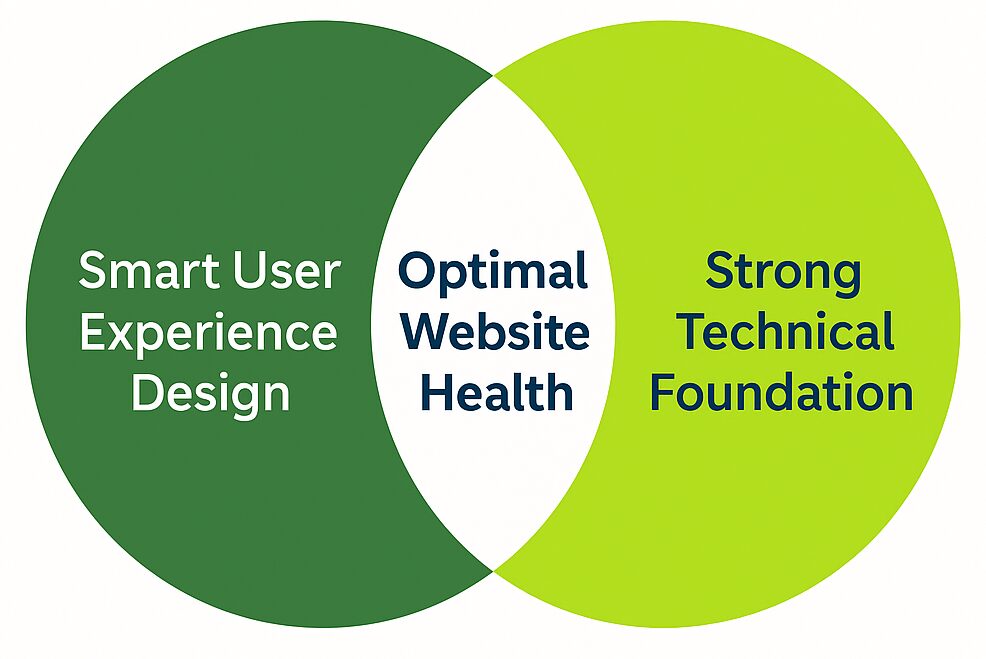
Or, to explain it in handy Venn diagram format:

Venn diagram showing how optimal website health is at the intersection of smart user experience design and a strong technical foundation.

Remember, the best way to avoid the damage that an outdated website can cause while saving as much money as possible is to stay focused on two things:

  1. What your users need. 
  2. What’s going on in the backend (i.e. making sure the tech is still doing its job). 

While keeping both in balance requires ongoing commitment, it will also help you stretch your site’s life and your budget.

Kanopi staff holding up letters that spell out "Ready for Launch"

Happily Ever After: Why Long-Term Website Support is Critical After Your Site Launches

Launching a new website is exciting for any organization. After months of planning, preparation and hard work, your new site experience is ready for all of your users to enjoy. But here’s the truth that many organizations overlook: launch day is actually the first day of your project, not the finish line.

Websites are not static; they evolve and change as your organization grows and they need ongoing attention and refinement to remain effective. If you want your website to continue to engage your audience while evolving to meet your ongoing business goals, long-term support should be part of your website strategy from day one.

Support Is More Than Just Bug Fixes and Security Updates

Many people assume website support is just about keeping the lights on with bug fixes and security updates. While these are crucial to the ongoing health of your site, a comprehensive support strategy goes far beyond the basic upkeep required to keep your site online. A successful long-term support strategy should always include:

  • Design Revisions: As design trends shift, your website should remain visually appealing and aligned with modern aesthetics.
  • Information Architecture Adjustments: Content organization and structure should evolve based on user behavior and your business goals.
  • UX and Navigation Enhancements: Making it easier for visitors to find what they need improves conversions and engagement.
  • Performance Optimization: Ensuring fast load times and smooth interactions keeps users engaged and prevents bounce rates from climbing.
  • Regular testing: Ensuring your site runs smoothly while identifying opportunities for further optimization.
  • Conversion Optimization: Regularly check CTAs, forms and other conversion points to make sure they are driving conversions.
  • Accessibility compliance is a moving target: Stay current on WCAG requirements and run frequent accessibility checks on your website. 

With a well-thought-out support plan, your website remains a valuable asset rather than slowly declining over time.

Consider The “Afters.” Where Will Your Website Be in 12 to 24 Months?

Is it still performing at its peak? Will your content still be relevant and easy to update? Will your navigation still make sense as your organization grows? Without ongoing support, websites can quickly become outdated, difficult to navigate, or misaligned with your current business objectives. If there’s one thing you can count on in the digital world, it’s change. Your website needs ongoing care and support in order to adapt accordingly. 

A well-maintained website not only stays fresh and engaging but also avoids the slow decline that plagues many neglected sites. Instead of scrambling to redesign an underperforming site every few years, ongoing support ensures continuous improvement and a fresh experience for users.

The Cost Benefits of Long-Term Support

Long-term website support can significantly extend the lifespan of your site, and reduce the need for costly redesigns every few years (we have one client whose site we’ve been maintaining for 10 years!). Instead of dealing with an expensive overhaul every three years, long-term support allows you to make strategic, iterative improvements over time. This spreads out costs, making it a more budget-friendly strategy while ensuring your website remains competitive and up to date. It also allows for the maintaining strong SEO performance and a positive user experience which means you won’t frustrate potential customers or advocates for your mission due to outdated design or functionality.

Your Website Deserves A Long-Term Strategy

If you’re considering redesigning your website, don’t just focus on launch day, think about what comes after. Ideally you’ll build your site for longevity, but additionally a long-term support plan will make your site last even longer. Partnering with an agency (shameless plug: like us) that offers long-term support ensures your website continues to work for you and remains relevant well into the future. Ongoing support is a cost-effective way for you to stay competitive, maximize your investment, and keep your website thriving—not just surviving.

Looking over the shoulder of a male developer at the code on his laptop screen.

More hands, more impact: when to use staff augmentation

Sometimes you need a few extra hands. 

When it comes to managing their digital presence, mission-driven organizations face unique challenges. Maintaining a strong website requires precision, collaboration, and expertise — from safeguarding data to ensuring accessibility and compliance with industry regulations.

For many teams, hiring an outside agency for a large website build can feel risky — especially if past experiences led to sites that didn’t meet their needs or felt disconnected from their mission. Their biggest fear is that they’ll end up with a site that’s built in a way their internal team won’t be able to edit, support, or extend on their own. 

To avoid these challenges, many organizations are turning to staff augmentation to get the support they need while retaining control of the process. It allows their internal teams to keep their autonomy while getting the extra help or expertise needed to get their website across the finish line.

How can staff augmentation help your website?

Instead of outsourcing an entire project, staff augmentation provides targeted support where it’s needed most — whether that’s design, development, accessibility, or ongoing maintenance.

It’s a model that offers some important benefits for teams, allowing them to:

  • Maintain control over the vision and execution of your website.
  • Boost team capacity to meet tight timelines or handle larger projects.
  • Fill skills gaps with specialized expertise, like compliance with ADA accessibility standards, security needs, or HIPAA regulations.
  • Collaborate seamlessly with professionals who integrate into your workflow without disrupting your team’s dynamic.

Here at Kanopi, we’ve been offering staff augmentation for years — often helping clients under pressure to deliver high-quality websites that serve users, staff, and stakeholders alike.

How we partner with organizations

Clients who partner with us for staff augmentation often prefer us to sign non-disclosure agreements, so we can’t share those specific case studies. However, we can list a few non-specific examples of ways we’ve supported clients and their in-house teams:

  • Bringing expertise to fill gaps: A Fortune 50 company brought us in to strengthen their team with custom Drupal module development, secure API integration for PPI compliance, assist with designs, keep projects on track, meet deadlines, and maintain high-quality standards. 
  • Collaborating under tight deadlines: When a hospital system’s in-house team was stretched thin during a major redesign, we stepped in to handle development work. We delivered on time while staying aligned with the team’s goals.
  • Enhancing accessibility and compliance: A nonprofit provider required updates to ensure their site met both accessibility and HIPAA compliance standards. Our specialists joined their internal team to address gaps, ensuring the site was compliant, user-friendly, and patient-focused.

One example we can cite is the UCSF Department of Surgery. We partnered with their IT team to develop a template for 80+ sites, allowing each to feature unique content or share content across multiple domains.

Ready to enhance your team?

Even with a dedicated internal team, there are times when an extra set of hands — or a niche skillset — can make all the difference. If you need staff augmentation for your website, we’re here to collaborate with your team, helping you overcome resource challenges and build a website that meets both your current and future goals.

Let’s create something amazing together. Contact us if your latest project could use consulting services or helping hands within our full spectrum of web services.