Kanopi and Chapter3 logos in white on top of a background image of the Golden Gate bridge

Kanopi Acquires Chapter Three to Expand Drupal Services

Strategic growth is the best kind of growth. And as we roll into 2026, Kanopi is growing in an exciting way. Kanopi has acquired Chapter Three, a San Francisco-based Drupal agency with a 20-year history of innovation and leadership in the Drupal community. 

Why This Matters: Strengthening Our Drupal Effectiveness

The acquisition expands our digital experience services, including Drupal services, and strengthens our presence in the Bay Area. It also supports continued growth with municipal and corporate clients while building on our existing work in nonprofit, education and healthcare

Expanding Our Full-Service Digital Capabilities

The addition of the Chapter Three team brings elite expertise in:

  • Decoupled & headless Drupal: Extending our technical stack for faster, more flexible web implementations. Speaking of headless …
  • Next.js expertise: With the first stable release of Next-Drupal 2.0 — a modern headless Drupal architecture — we can deliver performance improvements, expanded API capabilities, and a smoother developer experience powered by Drupal’s robust back-end. 
  • Community leadership: Integrating 20 years of Drupal contributions to stay at the forefront of the platform’s evolution.

For Kanopi’s CEO, Anne Stefanyk, this is a serendipitous change: Anne’s first job in the Drupal community was with Chapter Three.  

“We’re thrilled to welcome the Chapter Three team and expand Kanopi’s ability to take on more complex and impactful work. It’s gratifying to bring even more robust website services to our clients. For me personally, it’s meaningful to reconnect with the roots of my career.” — CEO Anne Stefanyk

What This Means for Existing Clients

Chapter Three clients will continue working with their existing teams and will have access to Kanopi’s additional services and support during the transition.

We look forward to serving our clients with even greater talent and expertise as our teams unite around shared values and a long-standing history in the Drupal community.

Questions? Contact the Kanopi team at any time.

Kanopi Team

Our Work With Indigenous Communities

We recently participated in an RFP for a potential Canadian client. In addition to the many standard questions that are part of most RFPs, this one also asked us to list our experience working with indigenous communities. In the midst of collaborating on our response, one of our team members had the notion that this would also be a great subject for a blog post, as we’ve noticed that the Indigenous community is sometimes overlooked within larger DEIB conversations. 

As far as the RFP, we were actually able to cite a robust body of work for Indigenous clients. Here are a few of the examples we included:

Voices of the Land — Sharing Stories from Indigenous Alberta

A digital public space for communities to create, share, discover, and celebrate Indigenous content online. Visit the Voices of the Land website.

Home page for Voices of the Land

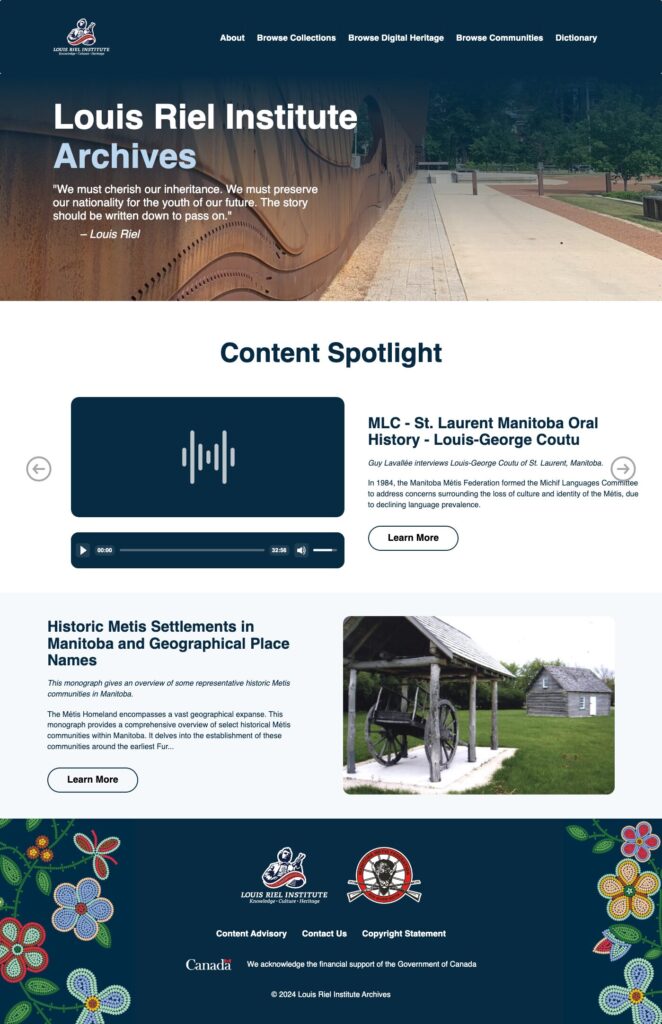
Louis Riel Institute

The Louis Riel Institute serves as the cultural and educational authority of the Manitoba Métis Federation. These digital archives were created to help researchers, scholars, educators, and enthusiasts delve into the collective history of the Red River Métis, fostering a deeper understanding and appreciation of their legacy and contributions. Visit the Louis Riel Institute website here.

home page for Louis Riel Institute

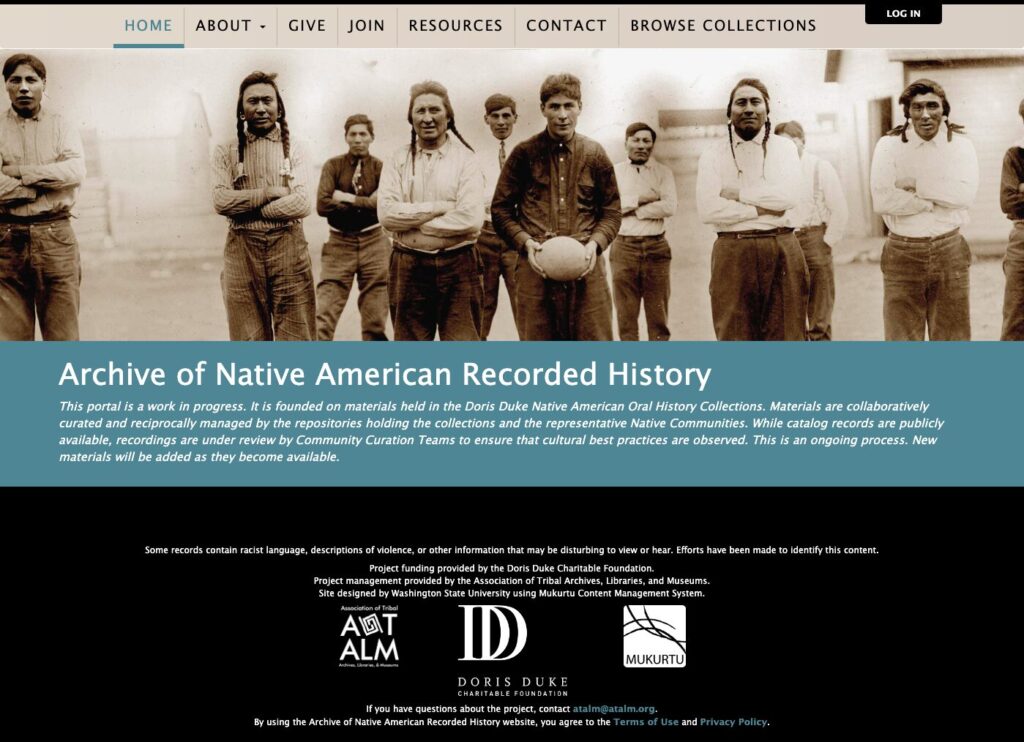
Archive of Native American Recorded History

An online archive for audio interviews and other recordings held in the Doris Duke Native American Oral History Collections. Visit the archive’s website.

home page for the archive of native american recorded history

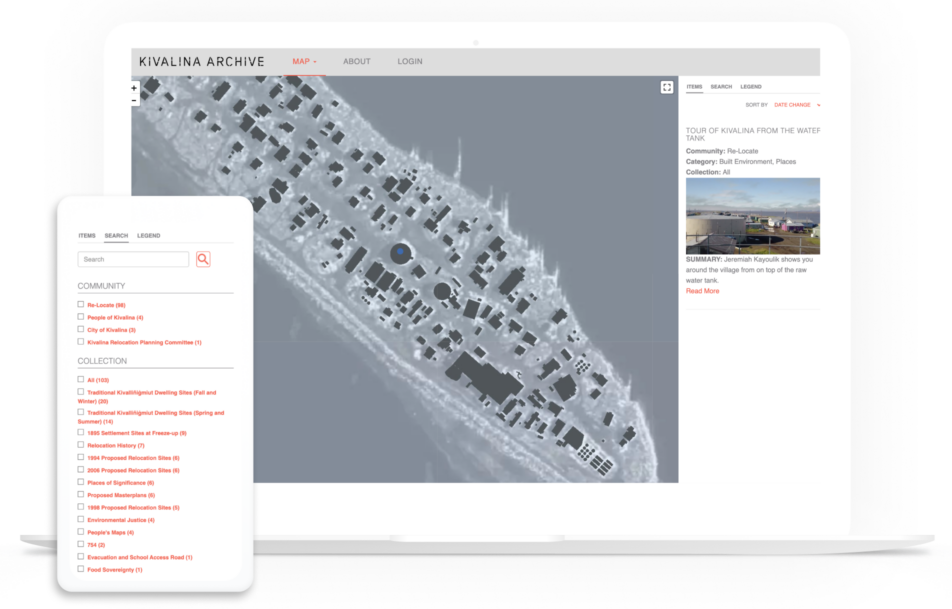
Kivalina Archive

We created an online archive for the Kivalina people of Alaska to help them preserve their cultural and natural history. The archive stores and provides access to records documenting their history of forced resettlement.

Karuk Tribe — Sípnuuk Digital Library, Archives and Museum

An online resource created to manage, share and enhance understanding of Karuk history, language, traditions, natural resource management and living culture. Visit the Sípnuuk Digital Library.

home page for the Sípnuuk Digital Library

Yocha Dehe Wintun Nation

Official website of the Yocha Dehe Wintun Nation.

home page for the Yocha Dehe Wintun nation website

Working to create Indigenous opportunities

However, working with Indigenous communities as our clients is only one part of the equation. Creating more opportunities within Kanopi is also a core part of our commitment to diversity and inclusion. This includes actively recruiting within Indigenous communities. 

We’ve established DEIB programs that guide us in posting on targeted job boards aligned with Indigenous communities in the US and Canada, such as:

  • Aboriginal Job Board (paid posting)
  • First Nations Job Board (paid posting)
  • Diversify Tech (paid posting, but not specific to the Indigenous community)

These efforts have so far been a success, as Indigenous people currently constitute 7% of our full-time, salaried workforce. Members of our HR team have also attended webinars on subjects such as Indigenous Resource Groups, and are doing further research on potential training focused on Indigenous recruitment.

On a broader level, we’ve implemented several key initiatives aimed at further reducing bias in our hiring process, such as:

  1. Completing unconscious bias training (HR department) and have plans to introduce mandatory unconscious bias training to all folks involved in the hiring process.
  2. Auditing all job postings through a lens of inclusivity.
  3. Anonymizing all applicants in an effort to remove any possible bias upon initial review.

Thought leadership

Whenever possible, we also like to share our experience, our expertise and our work with Indigenous communities in our blogs. In addition to marketing our capabilities, these posts can help us connect with others seeking to grow and promote business opportunities for Indigenous people. Here are a few examples:

Strengthening our strength

DEIB has become a priority throughout the business world in recent years, and is currently garnering a great deal of press and sparking an ever-growing number of conversations. While it’s been a priority for us since our inception, so has the understanding that we can always do better. We view diversity as both our strength and our competitive advantage — thus it’s not so much a goal but an ongoing, evolving process. By ensuring that our efforts include Indigenous communities, we help expand our talent pool and our business opportunities even farther.

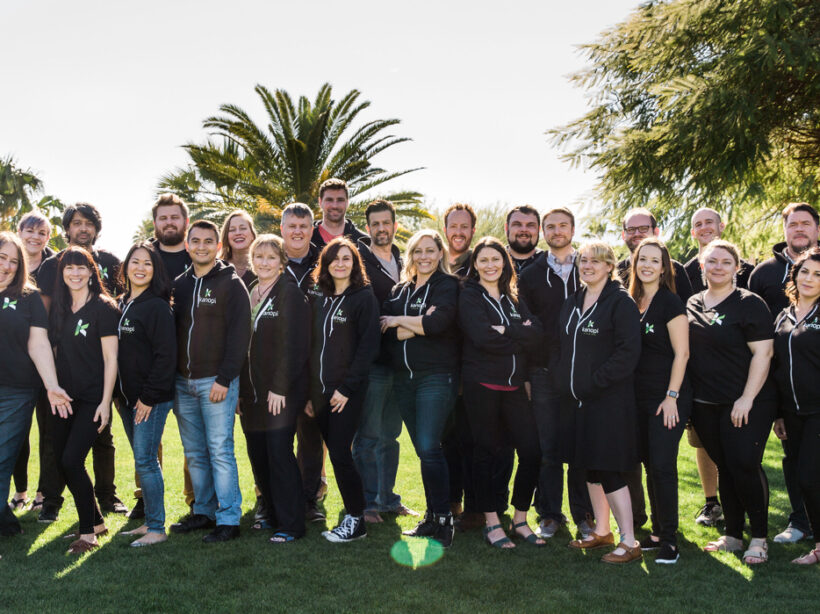
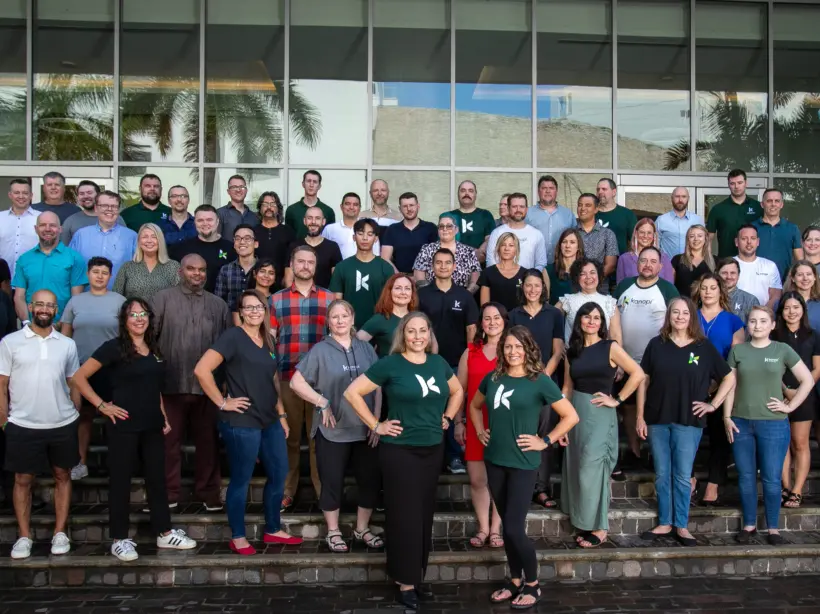
Kanopi staff smiling and posing

Hiring a Diverse Team: The Power of Intentionality and Inclusion

As organizations evolve within a changing business landscape, fostering diversity and inclusivity as crucial drivers of success and sustainable growth has become increasingly important. The benefits of having a diverse team range from enhanced creativity and innovation to improved problem-solving and decision-making. However, achieving true diversity requires more than just good intentions. It requires a deliberate and intentional approach throughout the hiring process and an infrastructure to provide ongoing support once diverse employees are on board. The following are points to consider when approaching the various stages of the recruiting and onboarding process with diversity and inclusion in mind.

Why diverse teams are beneficial

Before delving into the hiring process, it’s critical to understand the inherent value that diverse teams bring to an organization. Numerous studies have shown that diverse teams outperform homogeneous teams in many ways. Diverse perspectives foster creativity and innovation, leading to fresh ideas and unique problem-solving approaches. Different cultural backgrounds and experiences allow for a broader range of insights, enabling organizations to understand and serve diverse customer bases. Additionally, diverse teams exhibit higher employee engagement, increased productivity, and better financial performance. 

Building an Inclusive Pre-Hiring Culture

Building a company culture that supports diversity and inclusion is the first step to attracting and retaining diverse talent. Before embarking on the hiring process, organizations should evaluate their existing practices and policies to ensure they are inclusive. Revisit job descriptions and interviewer training with the goal of eliminating bias, establishing diversity goals and metrics, and taking steps to foster an environment that celebrates diversity. By clearly communicating and aligning efforts with your organization’s commitment to diversity, companies can position themselves as attractive workplaces for diverse candidates.

Meet Candidates Where They Are

Often recruiters will post on standard job boards or college alumni boards that specialize in their particular role or technology, but to attract a truly diverse pool of candidates, it’s important to think outside the box and post to avenues that may be more accessible to a broader range of people. Focusing on the alumni boards of HBCUs is one potential solution, however, it’s important to keep in mind that not all people have access to a college education. Companies can expand their reach by leveraging social media platforms using job-relevant hashtags, participating in workshops and forums that cater to expanding reach into underserved communities, and engaging with career-development programs and professional networks targeting underrepresented individuals – oftentimes, such professional networks send out email newsletters highlighting their talent or opportunities to engage with their talent. Additionally, partnering with recruiters, organizations, and associations focused on fostering diversity and inclusion can provide access to qualified candidates who may not otherwise have access to the job opportunities you offer.

Including Diverse Staff in the Interview Process

Including a range of staff members with diverse backgrounds in the interview process achieves a number of goals. From an internal perspective, doing so invites distinct insights, recognizes potential biases, and assesses candidates based on a broader array of experiences and qualifications. For the candidates themselves, the presence of diverse interviewers sends a strong message, conveying the organization’s commitment to embracing diversity and actively cultivating an inclusive environment.

Continuing to support new hires when they are on staff:

Hiring a diverse team is just the beginning; ongoing support and inclusion are essential to retaining diverse employees. This entails establishing mentorship programs, affinity groups, and employee resource networks that foster a sense of belonging and enable individuals to flourish. Regular training sessions on unconscious bias, inclusive language, and cultural competence can contribute to cultivating a more inclusive work environment. Furthermore, organizations should actively seek feedback from diverse employees and implement their suggestions for improvement, ensuring that their voices are both heard and valued. It is crucial, however, to avoid tokenism when implementing any program, ensuring that employees feel a genuine desire to participate rather than assuming their willingness based on their race, culture, or background.

The Effort is Worth it.

To cultivate an inclusive work culture and promote employee retention, organizations must make intentional and deliberate efforts throughout the entire employee lifecycle. The process begins by recognizing and providing training to current staff on the benefits of diversity and inclusion. However, it goes beyond that and includes fostering a supportive culture, actively seeking diverse candidates, involving diverse staff in the hiring process, and providing ongoing support. By embracing these practices, organizations can establish a vibrant and inclusive workforce that provides opportunities, fosters innovation, and drives success.

A screenshot from the Radical Candor video, featuring a woman in the center looking confused, with a gnome figurine on the left, and her male boss smiling on the right.

How Kanopi Applies Radical Candor

We’ve all been there — a colleague misses an important deadline, says something inappropriate during a meeting, or makes a mistake on a project that creates havoc within your organization, and you are in charge of talking to them about it. You want to give honest feedback, but more often than not you are like so many of us — you zig into kindness or zag into clarity, but can’t get a foothold either way. Perhaps you feel it’s easier to approach the other person and blurt out your unfiltered “honest feedback” without any kindness or clarity in your approach. So, then what? The original problem is never truly resolved, the other person feels blindsided or confused, the issue continues, and resentment builds with you, your team, and the person themselves. Rinse. Repeat. 

In walks the conundrum. Hard conversations are hard, and most of us are never taught how to communicate in ways that make hard conversations easier or more productive. The problem starts early on with the familiar adage, “If you don’t have something nice to say, don’t say anything at all.” When we are early in our careers, egos are fragile, and our working personalities are starting to calcify. In our working lives, and with the “if you can’t say something nice…” foundation in mind, we are told to “be professional” without any guidance as to what that actually means. As a result, many of us become accustomed to shutting down, avoiding interpersonal issues directly, or trying to navigate difficult situations without any tools to do so. 

This was a challenge we found ourselves facing at Kanopi. Enter: Radical Candor

Radical Candor is a communication philosophy created by Author, former Apple University faculty, and former “Googler” Kim Scott. Its approach seeks to teach folks how to “Challenge Directly” (giving feedback without fear of pissing the recipient off) while also “Caring Personally” (developing relationships by also giving consideration to the person you’re saying it to). Simply put: Practicing Radical Candor is meant to help those who use it build some of the best, most honest relationships of their careers. 

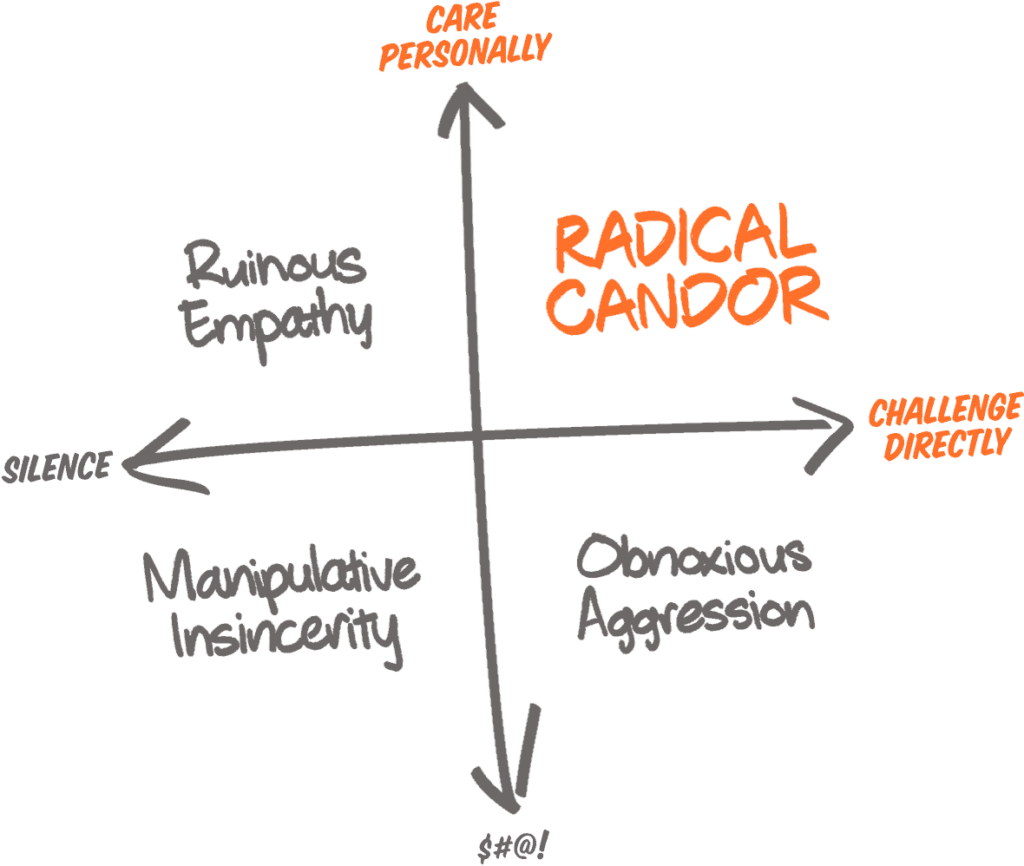
The Radical Candor framework. which is a grid split into four quadrants representing ruinous empathy, manipulative sincerity, obnoxious aggression, and radical candor.
The Radical Candor framework

The matrix Scott outlines to help guide Radical Candor is in the form of a 2×2 framework – the x-axis runs through the middle of the matrix and ranges from “silence” to “challenge directly.” the y-axis ranges from “$#@!” to “care personally.” The 2×2 Matrix is also an extremely helpful tool when there is an abundance of qualitative information that will guide potential solutions. 

To quickly understand the four types of feedback this matrix illustrates, here’s a little tl;dr: 

Ruinous Empathy (when one is kind but not clear)

  • We are so concerned about not hurting people’s feelings that we avoid giving feedback that may help get the outcome we need.

Manipulative Insincerity (when one is neither kind nor clear)

  • We often talk about someone, but not to them. When we do talk to them, we are passive-aggressive to try and manipulate a specific outcome.

Obnoxious Aggression (when one is clear, but not kind)

  • We may fight for our point of view or double down without being willing to listen or even allow for differing points of view. 

Radical Candor (when one is both kind AND clear)

  • We challenge directly and fearlessly while caring personally. 

Ultimately, Radical Candor seeks to change the way we speak and interact with those around us by conditioning us to carefully consider our words and actions. As such, the first and most important step to practicing Radical Candor is soliciting feedback from your colleagues. This way, you know what they need from you, and you can shape your approach as a result. Also, to use the frank language of the Radical Candor training, you learn how to “take it” in terms of feedback so that you can “dish it out” in a clear, kind way down the road. From there, you can operate from a place of thoughtful collaboration without skipping the hard stuff. 

In 2022, Kanopi started adopting Radical Candor by taking the hilarious multi-part Radical Candor “Feedback Loop” training. From there, we turned that training into a required step for onboarding all new employees. We learned a framework for difficult conversations: identifying the issue, pulling the person off to the side (as most people do not react well to being called out in public), and fearlessly communicating and interacting with one another in a clear and kind way. The training also digs into the ways people receive Radical Candor; no two people are alike, so the training helps to show us how to lean into caring, as appropriate, and understanding that clear feedback may be hard for the other person to receive. The training also provides communication techniques and ways to approach hard conversations, such as naming the things we are feeling, or using curiosity to understand how the other person is feeling.

Here are some tips and tricks to operationalize Radical Candor within your team and organization:

  • Gauge each situation individually
  • People are different! Feedback is not a “one size fits all” prospect
  • Check your bias!
    • Remember that non-white and non-male folks are often penalized for having strong emotions.
    • Check in with yourself to ensure you are not reacting because of your own unconscious biases.
  • Acknowledge emotions as they come up
    • We can’t “care personally” if we don’t allow ourselves to be real humans.
    • It is never helpful to ignore or dismiss emotional reactions — rather, lean into curiosity. 
  • Meet emotions from the other person with compassion
    •  An open display of emotions doesn’t mean the person isn’t willing to hear you. Emotions can be indicators that the feedback is hard to hear. 
    • Get curious by taking a moment to acknowledge emotions with simple questions.
      • “Can you help me understand how you’re feeling / what’s happening right now?”
  • Encourage Radical Candor
    • If you hear someone having an issue with another person, encourage them to meet privately and have a direct conversation by approaching with a mix of Caring Personally and Challenging Directly.

Ultimately, Radical Candor aims to empower employees to give each other real-time, honest, kind feedback on any topic or with any level of potential discomfort. Moreover, employees and teams will be more inclined to invest in their work when done regularly and well. 

Radical Candor immediately helped Kanopi lean further into our values by creating #Clarity and developing #Trust within our teams. Plus, we gained a fun new hashtag from our training: #RadyCandy! We encourage anyone who adopts this communication philosophy and engages in radically candid conversations to give others grace when utilizing this process (after all, this is a new skill for some and a refined process for others). We’ve found that folks in our agency are open to having difficult conversations – initiating and participating in them. The process can still feel challenging (after all, hard conversations are STILL hard), but this course taught us to identify the conversation styles outlined on the Radical Candor matrix. As a result, we can all help guide and model what it means to challenge directly while caring personally.

Kanopi Team

Supporting Employee Mental Health

Investing in your employees' well-being is an investment in your company's success.

Well, it’s official. We made it through the pandemic (or at least we’re getting close)! Dr. Rochelle Walensky, Director of the Centers for Disease Control and Prevention (CDC), recently stated that the world is “certainly a very different place” in 2023 than we were even a year ago, or ever before. While we are all undoubtedly grateful to have made it through such a challenging global event, it’s essential to acknowledge that the pandemic has taken a toll on all of us in one way or another, most notably concerning our mental health. 

That’s why it’s become increasingly important to take a step back and assess the ongoing impact the last few years have had on our workplace and the mental health of ourselves and our colleagues. While we can’t hit a reset button, we can look at a few ways to continue supporting each other at work — because when we’re feeling good, we can do great work together!

At Kanopi, we consider ourselves an employee-first organization — which is less like being the host of the best party ever, with free snacks, free drinks, and a foosball table (we are fully remote, after all), and more like prioritizing the needs and well-being of our employees above all else. To take this best-party-ever metaphor a bit further, our employees are the proverbial guests of honor, and we work hard to show them that they are valued and appreciated. That may seem like a tall order. But we’ve run a fully-remote agency since 2010 with consistently high retention and employee satisfaction numbers. 

So, what are some ways we take care of our employees, and suggest you do the same? 

Prioritize work-life balance.

If you’ve ever worked in an agency, you know the idea of work-life balance can be tricky, if not impossible. We try our hardest to break that stigma by encouraging our employees to prioritize self-care, whether taking breaks throughout the day, participating in physical activity, or making time for family. We also do our very best to keep work at work; if a person is done for the day or the week, they’ll only hear from colleagues about work during “off-hours” if it’s an absolute emergency.

How you can prioritize work-life balance for your employees: Better Up, an organization focused on executive coaching to improve employer/employee relationships, wrote this blog post with 12 tips to understand the need for and improve work-life balance for yourself AND your employees.

We hold space to “not be okay.”

Because we are fully remote, much of our inner-office communication happens via Slack. We made a conscious effort to create special-interest channels within Slack for our employees, one of which is our #being-human channel. It is a safe and supportive space where employees are encouraged to vent and support the person venting, helping everyone practice vulnerability and feel heard and validated without judgment. When we hold space for someone, we say, “I see you, I hear you, and I’m here for you.” It’s a powerful way we build trust, strengthen relationships, and foster a culture of empathy and understanding.

How you can hold space for your employees: This article, written in 2020 by the Harvard Business Journal, outlines some ways that employers can hold space for employees who are “not okay.” Their advice still holds true in a post-pandemic world.

We support social connections.

Because our employees are spread out across the US and Canada, we provide a small “dinner and drinks” stipend to encourage employees who live close to each other to connect in person. This can help to combat feelings of isolation and loneliness that may have been exacerbated by the pandemic while fostering a sense of community and belonging.

How you can support social connections: If in-person meet-ups aren’t accessible for your organization, Flexjobs, a resource for employers (and job seekers) who have remote workforces, wrote this excellent article about ways remote workers can connect and spend time together that is not strictly work-focused. It includes a “question of the week,” fun company contests, and virtual workout breaks.

We provide mental health resources.

By ensuring our benefits align with employee mental health resources coverage, we are secure that our employees can manage their mental health concerns more effectively. That said, similar types of support are offered in other, less conventional forms — from our Employee Assistance Program (EAP), which provides access to mental health professionals and resources in the US, to an employee-run meditation practice, held three times a week on Zoom. These resources can help employees feel more supported and improve their mental well-being.

How you can incorporate mental health resources: This article from Mental Health America demonstrates low-cost, high-impact ways businesses can support and improve the mental health of their employees, including reviewing policies and making contingency plans. 

Supporting mental health is right. And smart.

Supporting employee mental health isn’t just the right thing to do; it’s the smart thing to do. It’s like giving your employees the best gift bag at the party, except instead of cool trinkets, they have the power to be happier, healthier, and more productive. And let’s be honest, who wouldn’t want a team of happy, healthy, and productive employees? 

Based upon our quarterly employee happiness survey, our commitment to being an employee-first organization is one of the key factors behind our excellent retention rates, year over year. So, whether you are providing mental health resources, promoting work-life balance, or simply holding space for your employees, investing in their well-being is an investment in your company’s success.

Juneteenth reminds us to reflect on what more we can do to serve our employees, clients, and community.

Juneteenth (short for “June Nineteenth”) gets its name from June 19, 1865, the day that Federal troops arrived in Galveston, Texas to announce that the Civil War was over and ensure that enslaved African Americans were freed. The troops’ arrival came a full two and a half years after the signing of the Emancipation Proclamation. Juneteenth honors the end to slavery in the United States and is considered the longest-running African American holiday.

At Kanopi, we’re all about creating impact for our clients. And as we are committed to diversity in all its forms (diversity boosts innovation and creates better products after all), we want to observe Juneteenth in an impactful way. This holiday — which is also a Kanopi-recognized holiday — gives us an opportunity to reflect, take stock of some progress that Kanopi has made, and look ahead to what more we can accomplish. 

There are three ways we’re working hard to serve our employees, clients and community:  

  1. Diversifying Kanopi 
  2. Diversifying Drupal
  3. Juneteenth activities

Diversifying Kanopi

Kanopi has always led the way by being one of the few Drupal agencies that are woman-owned and has been since its inception. We pride ourselves on being largely women-run and having a high percentage of female and gender non-conforming employees (61%, at last count), and more than 50% of our employees are over the age of 40. These statistics are rare in any tech space. 

We’re also a leading agency when it comes to accessibility, with experts on staff who regularly speak on the subject (check out our accessibility and inclusion posts). Every one of our websites is AA-compliant at launch. Making sites accessible allows access to those with disabilities, and making sites inclusive supports everyone for their uniqueness and individuality. 

Yet even though we had more diverse staff than most agencies in a few ways, back in 2019 we recognized that we could do better and be more inclusive when it came to hiring. We were not as racially or culturally diverse as we wanted to be, so we made some strategic efforts to align our hiring efforts with diversity, equity, and inclusion over the next year. 

Here are some steps we took to accomplish that: 

  • We intentionally posted job openings on social media using hashtags targeting BIPOC, female, and LGBTQ candidates. This meant not only tagging for #WordPress or #Drupal, but also using hashtags such as #BlackTechTwitter, #LatinXTechTwitter, #LGBTQTechTwitter, and #DiversifyTech.
  • We trained our interview teams and our staff to check their own biases, use inclusive language, learn to “call each other in” when needed, and focus on creating a welcoming, safe space for new hires from varied backgrounds. 
  • We updated the inclusivity statement on our website to be more specific to these efforts. 
  • Because we are a company that seeks out a diverse, inclusive client base, dedicated to making the world a better place, we included an alignment statement on all applications to allow candidates the opportunity to opt into and align with our commitment in serving and working with underserved and underestimated communities. 

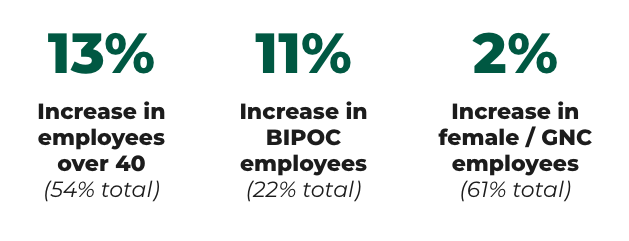
So how did we do? Here are some stats from the last 6 months (January-June, 2021)

Image of statistics for Kanopi's hiring from January to June 2021

Kanopi is not only woman-owned and led, but can now boast:

  • a 13% increase in employees over 40 (for 54% of staff total), 
  • an 11% increase in BIPOC employees (now making up 22% of our staff), and 
  • a 2% increase in female or gender-non-conforming employees (making up 61% of our staff). 

In order to do this, we had: 

  • 3,896 new candidates enter our application process over one year
  • Resulting in 74 candidates being interviewed
  • With 12 candidates ultimately hired. 

It’s an encouraging start. 

Diversifying Drupal

Over 1 million websites run on Drupal and there is consistent demand for Drupal talent across the globe. And yet the number of individuals who identify as a racial minority in Drupal in North America is frustratingly low. 

Extending our commitment to diversifying our corner of the tech world, Kanopi became a founding sponsor of Discover Drupal. Run by the Drupal Association, this scholarship and training program is currently open to individuals 18 or older living in North America that identify as racial minorities and provides training and support so they can have careers in Drupal. The goal is to have students graduate every year and be in a position to be hired for internships or jobs with Drupal agencies looking for diverse talent.

In addition to sponsorship, there are two staff members volunteering with the program: Allison Manley, who is acting as Project Manager, and AmyJune Hineline, who is acting as a mentor for the students. 

Juneteenth activities

Starting on June 19, 2020, Kanopi gave employees the holiday to use for any volunteer, training, civic service, or reflection around the holiday and its meaning. And as of this week, the rest of the country is recognizing it as well. 

Our staff is using the day in a variety of ways, from local volunteer opportunities, to reading, to watching black films in order to support black artists and understand their viewpoints. 

What can you do for Juneteenth?

There are so many ways you can use your time and energy this Saturday, June 19th. But here are a few ideas:

  1. Celebrate Black culture and history. Read a book club by an established or emerging Black writer.
  2. Similarly, check out a movie by Black artists and experience a different point of view. 
  3. Check out the Pulitzer Prize-winning 1619 Project from the New York Times.
  4. Live in Atlanta or Chicago? Support local restaurants through Black People Eats, which has over 110 restaurants involved. 
  5. Find ways to support and contribute to your local Black community. Eat and shop at black-owned businesses.
  6. Look for local fairs, parades, marketplaces, museum events, and other ways you can show up and show out for Juneteenth.

Kanopi Team

Kanopi Wins Two 2021 Pantheon Lightning Awards

For our work with Covenant House, Pantheon awarded Kanopi the 2021 WebOps Team of the Year Award winner and the Trailblazer Award winner.

Kanopi Studios has been named as a winner in two categories in Pantheon’s inaugural Lightning Awards. The awards were founded to recognize and celebrate WebOps leaders creating exceptional digital experiences.

Pantheon accepted entries from customers and partner agencies of all sizes, across a number of markets, that have been using the Pantheon WebOps Platform to drive success and achieve true business impact. Their stories, submitted via text and video, were then judged by a panel comprised of Pantheon executives and industry leaders.

Kanopi is honored to have been granted the 2021 Trailblazer Award winner, which celebrates the organization that best demonstrates agility and the ability to transform how they operate during these challenging times. But we also were honored to win the award for 2021 WebOps Team of the Year! Both of these were awarded for our work with Covenant House and how we were able to help them pivot quickly in 2020.

Kanopi’s holistic approach to web strategy, design, development, and support encompasses the entire lifecycle of a website. Whether you call it “growth-driven design,” “WebOps,” “continuous improvement,” or something else, it’s all about keeping focused on creating beautiful and sustainable sites that last for the long-term.

“We are committed to celebrating the best of the best in WebOps, and our inaugural award winners and honorees have set the bar extremely high,” said Pantheon Co-Founder and Chief Strategy Officer, Josh Koenig. “Congratulations to our award winners for their incredible accomplishments delivering impactful digital experiences.”

Kanopi’s AmyJune Hineline also won an Honorable Mention award as a Community Advocate Award Honorable Mention Winner.

All winners receive a 2021 Pantheon Lightning Awards trophy and a customized badge to showcase their company as an award-winning Pantheon customer.

To learn more about the awards, and view the full list of winners and honorees, please visit: https://pantheon.io/pantheon-lightning-awards-2021

Watch the Video

Listen to the Podcast

About Pantheon

Pantheon is the WebOps platform where marketers and developers drive results. Every day, thousands of teams create, iterate, and scale WordPress and Drupal sites, reaching billions globally. Organizations including IBM, Clorox, and the ACLU accelerate development and publish in real-time using Pantheon’s collaborative workflows. Learn more at Pantheon.io.

Woman with her arms raised to the sky

How to be Eco-Friendly in your Home and Office

Kanopi is all about sustainability. This Earth Day, we offer these tips and tricks to lessen the impact on our environment in your home and office.

As Kanopi Studios, we believe in sustainable websites, but also a sustainable environment. After all, Kanopi began due to a love of treehouses. Since we’re dedicated to creating as much of a positive impact as possible in the world, we certainly want to ensure we aren’t leaving a negative impact. 

If we had a physical office, we would do company recycling, energy savings, etc to offset using those resources. As a remote agency, we are ecofriendly by design, as we neither have a central office, nor are we engaged in a lot of travel. 

However, there are things we can all do at home to make our personal office spaces as eco-conscious as possible, even if we just donate our old items responsibly. We offer these tips and tricks so you too can have an eco-friendly office and lessen the impact on our environment.

Energy

  • Fix drips and leaks on faucets. 
  • Fill your dishwasher and washing machines to the proper limits to make full use of the water. 
  • Line dry your laundry. 
  • Use energy efficient light bulbs. 
  • When your old appliances need replacing, look for energy-efficient appliances with the “Energy Star” label.
  • Turn off all lights when you leave a room. 
  • Lower the temperature in your home during winter, and don’t overuse the air conditioner in the summer. 
  • Unplug any unused chargers and appliances.
  • Seal all of your windows and/or replace them with more efficient double-paned windows. 
  • Get an energy audit! Your local energy companies will usually provide this for free.

Recycling

  • Use recycled paper products
  • Recycle plastic, metals, and glass whenever possible
  • Dispose of ink cartridges safely
  • Dispose of batteries safely
  • Use rechargeable batteries
  • Stop using disposable bags, and get in the habit of carrying your own recyclable bags and totes. 
  • Carry a water bottle rather than buy bottled water. 
  • Avoid as many single use containers as possible. This covers beverages, makeup, snacks, and so much more. Instead, buy bulk.

Transportation

  • Use your bike, skateboard, unicycle, rollerblades, etc instead of a car. Or walk if it’s close enough. It’s good for your health and the environment!
  • Use public transportation if you are traveling to a major metropolitan area.
  • Combine your trips so you use your car less. 

Home and Cleaning

  • Purchase things like use reusable zip-close bags, face cloths, and wipes from places like the Zero Waste Outlet.
  • Use chemical-free cleaning products. Switch to products that contain sustainably grown or raised ingredients that do not deplete the ecosystem, nor harm it when expelled back out. Some examples are dropps and the many items at EarthHero.
  • Use cloth rags instead of paper towels. Save old tshirts and socks for this. 
  • Wash laundry in cold water rather than hot water. 
  • Use environmentally friendly shampoos and soaps.
  • Use cloth napkins instead of paper napkins. 
  • Donate to — and shop at — thrift stores. You’ll be recycling perfectly usable items, supporting your local economy, and saving money.
  • Before buying anything new, first check your local Craigslist, Freecycle, or Buy Nothing groups.
  • Repurpose glass jars for storage and to use as containers. 
  • Install low-flow shower heads, faucets, and toilets. 
  • Collect rainwater, and use it to water your houseplants and garden.
  • Switch to tree-free toilet paper. Try HeyBippy or HelloTushy
  • Use a safety razor or electric razor instead of a disposable plastic razor. 
  • Opt for products made of glass rather than plastic. 
  • Switch to reusable menstrual products like menstrual cups, period panties, and cloth pads.
  • Avoid plastic wrap and instead use beeswax wraps
  • Use real plates and flatware instead of paper plates and plastic cutlery.
  • Get rid of the Kuerig and opt for a trash-free options such as pour-over or french press, then throw those grounds into your compost pile!
  • Opt for looseleaf tea (tea bags are made with plastic!) 
  • Rather than throw things away, find a local repair shop (tailors, cobblers, and woodworkers) to get all of your items repaired. 
  • Use cloth diapers either exclusively or in combination with disposable diapers. Even one cloth diaper a day keeps 365 of them out of landfill each year. 
  • Are you moving any time soon? Here’s a guide on how to lessen the environmental impact of your move.

Food

  • Plant a garden. It doesn’t have to be large or complicated. Start small and go from there. Plus kids love it!
  • Switch to shade-grown coffee with the “Fair Trade” label.
  • Eat less meat. Meat and dairy are responsible for the majority of greenhouse gas (GHG) emissions in the agriculture industry. 
  • Plan your meals so you buy the right amount of food in order to cut down on food waste.
  • Eat the ends and stems. Don’t throw out the tops of the carrots and beets. Beet tops make a great chard substitute and carrot tops make a delicious pesto. Check out this cookbook for tips on how to use your scraps.
  • Have leftover food? Create your own compost bin for $15
  • Join a CSA (community supported agriculture) to receive local, farm-fresh delivered to your doorstep.

Other

  • Switch to paying your bills online. This avoids the additional paper, postage, and energy to deliver the bill to your mailbox. 
  • Buying a new car? Look at an electric or hybrid vehicle. 
  • Use recycled gift wrap and reuse the ribbons. 
  • Stop using single use plastic straws, Instead look at metal, bamboo, or silicone straws. Here are some great suggestions.
  • Look for recycled content and corporate responsibility programs where products can be returned at the end of their life. 

Additional Resources:

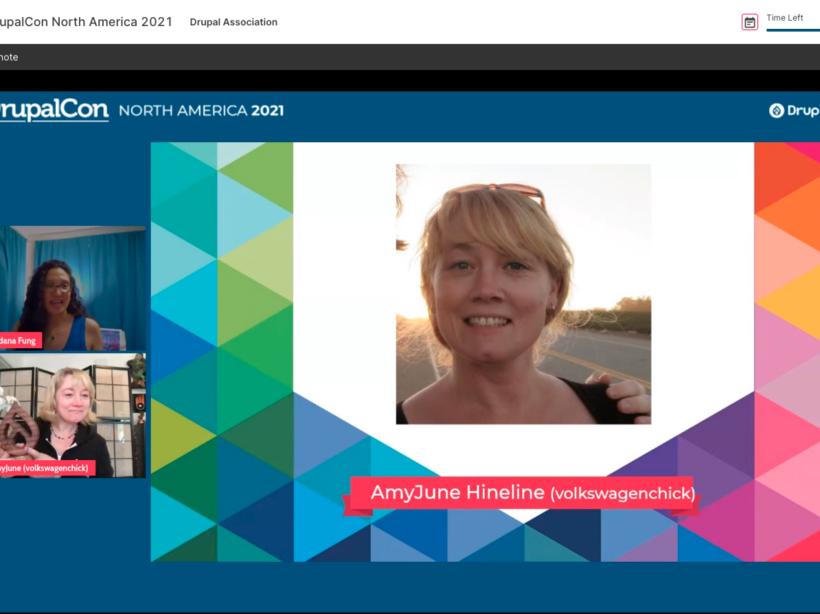
AmyJune Hineline receiving her award at DrupalCon 2021

AmyJune Hineline wins Aaron Winborn Award at DrupalCon North America

There are thousands of folks who volunteer in so many capacities in the Drupal community, from helping with registration at camps, to contributing code, to posting on social media, and in hundreds of other areas. Each of those contributions, no matter how small, move the Drupal project forward in positive ways.

But every year, one person is recognized by the Drupal Association for contributing the most over the course of a year. Kanopi is proud to announce that our own AmyJune Hineline, Community Ambassador, has won the 2021 DrupalCon Aaron Winborn Award. This award is, “presented annually to an individual who demonstrates personal integrity, kindness, and above-and-beyond commitment to the Drupal community.”

How does AmyJune demonstrate those qualities? Here are some examples:

  • She regularly gives presentations (about 15 per year in the Drupal space alone).
  • Many of those presentations are around accessibility and inclusivity, as she strives to make Drupal both accessible and inclusive to all. 
  • Besides giving talks, she volunteers and organizes at camps and cons (about ten per year).
  • She runs several contributor workshops to help interested folks as they navigate the process of contributing to Drupal for the first time. 
  • She does all this with patience and a smile. 
  • And lastly, this doesn’t even include all her work in the WordPress community. 

Kanopi Studios is proud to be a place that fosters community work (community is actually one of Kanopi’s seven values) and we’re thrilled that AmyJune has been recognized with the Aaron Winborn Award for her hard work and positive contributions moving both the Drupal project and community forward. 

This tweet says it all:

Congratulations AmyJune!

Check out some of her past presentations on accessibility and inclusion below. 

AmyJune Hineline is actually the second Kanopian to win the award; Nikki Stevens won the award in 2017.