





Today’s nonprofit leaders understand the importance of a well-developed website and online presence. To ensure your mission has maximum exposure and effectively inspires giving, you need a content management system (CMS) that reflects your organization and meets all your online fundraising needs.
Many nonprofits find that Drupal is the right choice for their needs. Drupal is a popular platform that supports organizations of all sizes and across fields. In this guide, we’ll explore Drupal’s key features and benefits to help you decide whether to use this robust, secure CMS.
Drupal for Nonprofits: FAQs
What is Drupal?
Drupal is a free, open-source content management system used to build and manage complex websites and digital experiences. Ranking among the top 10 global CMS platforms, it offers robust baseline functionality and flexible features that make it a preferred choice for nonprofits, enterprises, and government agencies alike.
Is Drupal scalable?
Yes. Drupal is designed to grow with your organization when supported by the right technical architecture. Its API-first core and structured content model make it possible to reuse content across websites, applications, and other digital channels.
Thousands of contributed modules, along with custom development, allow your team to add functionality as its needs evolve. Drupal’s built-in caching capabilities, combined with support for CDNs, reverse proxies, and scalable hosting infrastructure, help a well-architected site accommodate increasing content, integrations, and traffic.
What is the current version of Drupal?
The current major version is Drupal 11, with Drupal 12 scheduled for December 2026. Drupal has released multiple versions over the years, and several older versions are still in use alongside their newer counterparts. Read our dedicated article on Drupal planning and development if you want to take a deeper dive into Drupal versions and future planning for a Drupal site.
Top Benefits of Drupal for Nonprofits
Here are some of the top reasons nonprofits thrive with Drupal:
- Cost-effectiveness — Because Drupal is an open-source CMS, its software and source code are freely available and can be redistributed or modified. That means anyone who wants to use Drupal can.
- Scalability — Thanks to Drupal’s modules and themes, its platform is completely scalable and prepared to grow as your organization does.
- Custom coding — Drupal can accommodate more complicated nonprofit websites with its custom coding and themes. Use Drupal to customize content types, fields, and content presentations to support any of your content strategies. Drupal even allows you to apply different administrative themes to your website or use your public-facing theme as part of your site management and editing experience.
- Multiple user permissions — If you have multiple users, Drupal has a built-in access control system that lets you create new visitor and administrator groups with granular permissions. Add anywhere from a few users to hundreds of thousands.
- Robust features — Take advantage of Drupal’s core features as well as the growing list of community-made modules. Because Drupal’s community of developers is constantly working, there are always new modules and upgrades that you can leverage.
- Security — Drupal’s enterprise-level security and ability to provide in-depth security reports are some of its top features. This is why Drupal is used by government institutions and other large, security-conscious organizations.
- Multilingual in Drupal core — Your content can be presented in multiple languages to your site visitors. Drupal core includes Language, Interface Translation, Content Translation, and Configuration Translation. Site builders can enable and configure the relevant modules, add languages, and supply translations, or integrate with translation services.
- Integrations — Along with its modules and themes, Drupal integrates with a wide range of third-party applications, including Salesforce, Marketo, HubSpot, SugarCRM, Xoom, PayPal, SAP, PHP Cart, social media platforms, and any other service that has an API.
Drupal Features that Nonprofits Love to Use
Drupal offers the following features that make connecting with supporters and collecting donations easy for nonprofit organizations:
- Reusable components — Instead of relying on custom HTML fields, nonprofits can create feature-rich pages using reusable components in the Canvas editor or by using Paragraphs. This functionality acts as a component-based page builder, allowing content editors to easily self-manage layouts and insert reusable, out-of-the-box UI elements, such as accordions, tabs, slideshows, card components, and image galleries, without needing a developer.
- Auto-updating media library — Your organization can use Drupal’s Media Library to centralize asset management. Functionally, this means that if an editor updates an embedded video or image in the library, it automatically updates everywhere it is referenced across the entire website. It can automatically extract specific metadata, such as a video’s duration and description, eliminating the need for manual data entry.
- Custom modules and third-party API integrations — Drupal can connect to external APIs essential to nonprofit operations, integrating payment gateways, security portals, and external databases (such as collection management systems or staff directories), incorporating them directly into the Drupal ecosystem.
- Decoupled and headless architecture — Organizations requiring API-powered digital experiences can implement headless Drupal architectures. This specifically includes using Next.js for Drupal to separate the backend CMS from the front-end presentation layer, giving developers expanded API capabilities and front-end flexibility.
- WYSIWYG editors — You can configure standard what you see is what you get (WYSIWYG) text editors to allow content creators to format text, build columns, and style specific elements like buttons and quotes directly on the page.
- Advanced content modeling and configuration management — Nonprofits can use Drupal’s backend content modeling tools to consolidate excessive content types and fields. This feature simplifies the backend taxonomy and user permissions, making the site’s architecture much easier for internal teams to navigate and maintain.
- Structured data — Use specific HTML structures and structured data directly within the code to appeal to search engines and manage search engine optimization (SEO).
3 Nonprofit Drupal Website Examples
Gain inspiration for your nonprofit site and see Drupal in action by exploring successful nonprofit websites. To help you better determine whether Drupal is the right CMS for you, here are three examples of real nonprofit websites built with Drupal.
1. Gilder Lehrman — Hamilton
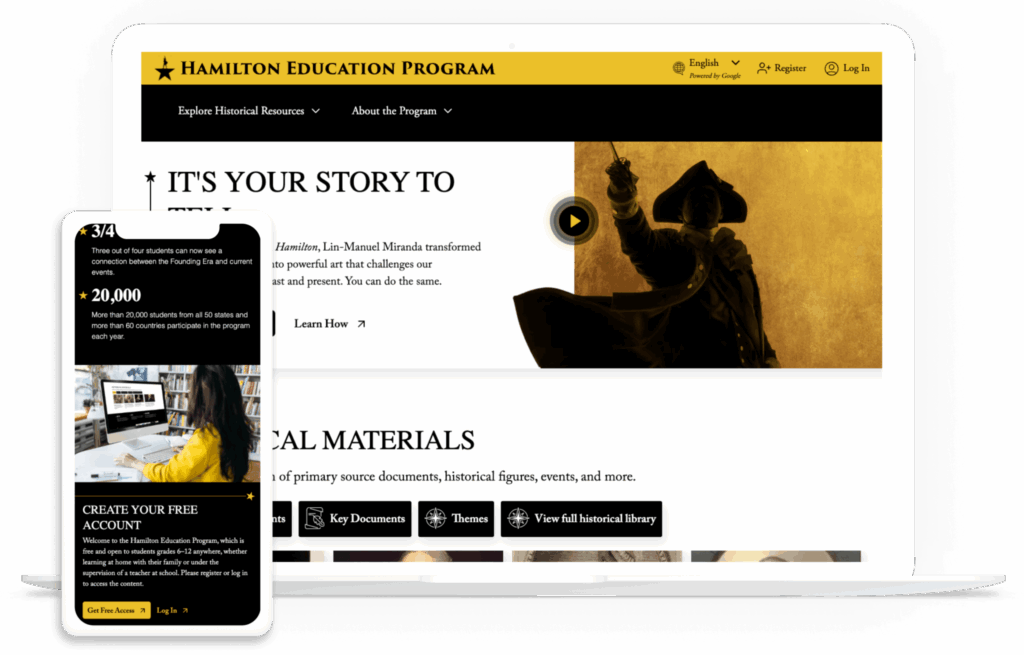
The Hamilton Education Program is a collaborative effort between Lin-Manuel Miranda, creator of the Hamilton musical, and the Gilder Lehrman Institute of American History. The program’s goal is to use the Hamilton musical as an educational tool to bring history to life for youth audiences.
The organization’s website plays a key role in showcasing American history to high school students, who use the site to conduct research and eventually create their own performance pieces.
Here are some of their website’s standout features:
- An intuitive resource library that allows users to browse resources by themes
- Single sign-on (SSO) for a simplified digital ecosystem and enhanced security
- Curated content for different audiences, including parents, students, and teachers
Read our Gilder Lehrman case study to learn more about Kanopi’s role in building their website.
2. Humane World
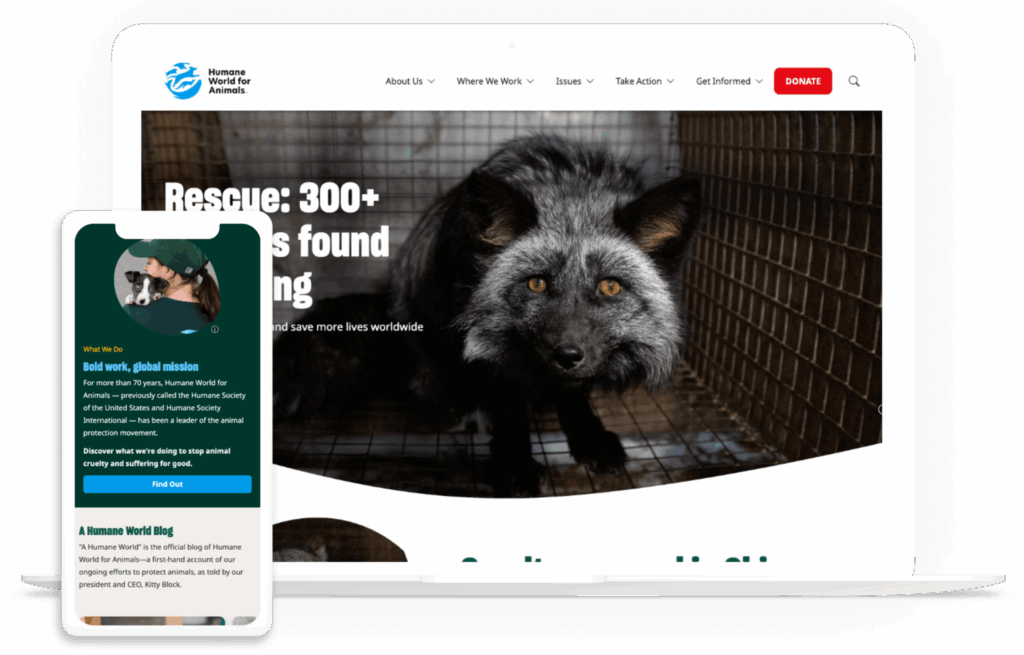
Humane World for Animals is a nonprofit focused on ending animal suffering. Their goal is to strengthen the animal protection movement through policy change and activism. The organization’s website is a vehicle for sharing information about its important work and providing ways for supporters to take action, whether through donating, volunteering, or fundraising.
Here are some standout features of this website:
- Compelling imagery that brings the organization’s mission to life
- Translation capabilities to reach a global audience
- Geolocation features to serve different footer information based on the visitor’s country
Read our Humane World case study to learn more about Kanopi’s role in building their website.
3. The National Audubon Society
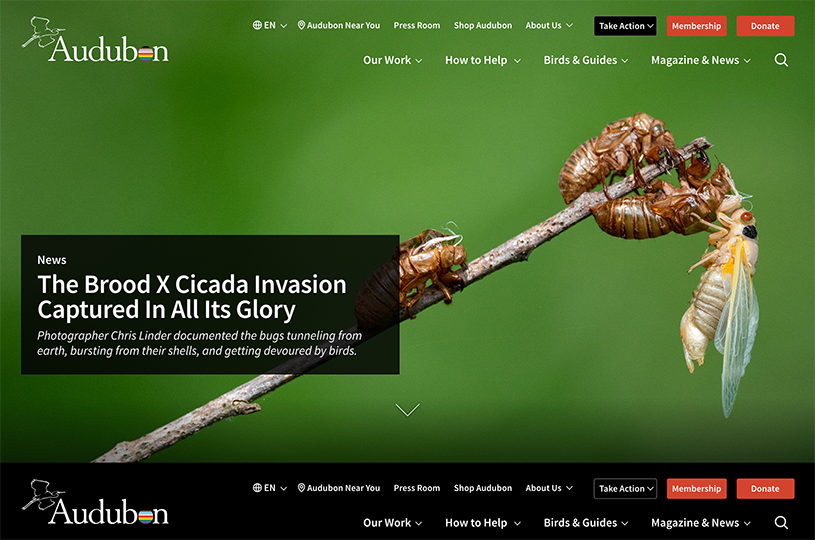
The National Audubon Society is an American nonprofit environmental organization dedicated to the conservation of birds and their habitat. Before using Drupal, the National Audubon Society had over 100 subdomains, struggled to edit and manage all its content, and lacked access-level restrictions.
The National Audubon Society needed one unified system and chose to merge its sites together using Drupal’s platform. With this change, they were able to offer:
- Multiple language versions of the website
- User permissions granted to the appropriate staff members
- Ample security for all modules
Curious to learn more about this project? Check out Drupal’s dedicated case study on The National Audubon Society.
Drupal for Nonprofits: How Kanopi Can Help
What can partnering with the right nonprofit technology consultant do?
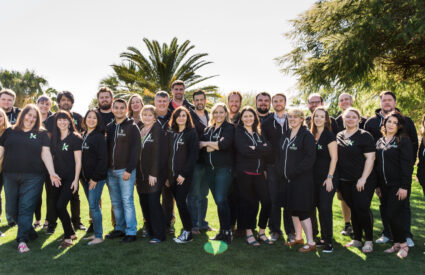
At Kanopi Studios, we can help your nonprofit not only determine whether Drupal is right for your mission but also develop your site and set it up for long-term growth.
By partnering with Kanopi’s team, you gain support from professionals with years of experience working with mission-driven clients, as well as access to our extensive expertise in digital nonprofit strategy. We partner closely with large and sophisticated organizations like yours to outline your nonprofit’s online goals, determine how Drupal can further those goals, and create a plan to put them into action.
Not only are we fully up to date on the latest nonprofit industry trends and Drupal updates, but we also take a continuous improvement approach to site development. Instead of waiting for CMS updates, we regularly recommend improvements and adjustments, such as navigation strategies and SEO fixes, so that your site remains valuable and well-maintained. This way, your nonprofit website grows with your organization and services.
Kanopi’s Drupal for Nonprofits Services
Here are some of our top Drupal maintenance and support services:
- Module and plugin updates: Websites are living ecosystems that require continual care. Kanopi goes beyond basic maintenance by providing ongoing updates for modules, themes, and plugins, as well as handling complex CMS core upgrades, such as migrations from Drupal 7 to Drupal 11 and upgrades from Drupal 9 or 10 to supported modern Drupal versions, to ensure your platform remains secure and sustainable for long-term growth.
- Bug fixes and security patches: Kanopi implements robust DevOps practices to safeguard your organization’s sensitive data. This includes deploying critical security patches, utilizing Git-based workflows for safe multi-environment updates, and conducting quarterly security audits to proactively mitigate system vulnerabilities and protect against attackers.
- Development modifications: No project is too technical or complex for Kanopi’s engineers. Kanopi is uniquely willing to rescue, refine, and enhance complex code built by other agencies. Development modifications can range from creating custom modules to extend your site’s functionality to building out blazing-fast headless and decoupled architectures using Next.js.
- Updating content types/views: We actively audit and consolidate excessive content types to simplify the backend experience for your team. By leveraging tools like Drupal’s Paragraphs and Media Library, we replace rigid fields with flexible, reusable components, empowering non-technical content editors to effortlessly build and manage layouts on their own.
- Third-party integrations: Kanopi’s engineers seamlessly connect Drupal to the external APIs your organization relies on. This includes integrating database portals, collection management systems, secure user portals, and real-time staff or physician directories (like UCSF Profiles) directly into the Drupal ecosystem.
- CSS/HTML changes: To ensure your site always looks and functions flawlessly across devices, we handle ongoing design and mobile-responsive theme modifications. When optimizing sites, we frequently convert legacy custom HTML and CSS into intuitive UI components to prevent formatting issues and streamline future updates.
- Commerce updates: For organizations relying on online revenue and event ticketing, Kanopi integrates and maintains secure payment gateways and commerce systems. We ensure the technical transaction environment remains frictionless, safe, and aligned with your conversion goals.
- Performance enhancements: Kanopi continuously monitors analytics and user behavior to deploy strategic performance enhancements. This involves optimizing caching mechanisms, compressing images, streamlining messy navigation architectures, and reducing page load times to keep users engaged and prevent visitor drop-off.
- Web accessibility optimization: We treat digital inclusion as an absolute imperative. We optimize your site at the architectural code level to meet Web Content Accessibility Guidelines (WCAG) AA compliance. This includes adjusting color contrast and interaction target sizes, as well as providing specialized training so your internal writers can continue publishing accessible content long after launch.
- Technical SEO optimization: Kanopi builds authority and search visibility directly into your site’s code. We apply proper HTML structure and structured data, resolve technical crawl errors, optimize metadata, and implement internal linking strategies to ensure your content is easily found by both traditional search engines and AI models.
When you partner with Kanopi, you get more than the typical Drupal support and maintenance package. Our team goes above and beyond to deliver the highest-quality development work.
Whether you need monthly support or a full website rebuild, Kanopi is dedicated to taking your mission to the next level and ensuring your online presence accurately represents your prestigious organization.
In Summary: Empowering Nonprofits with Drupal
To recap, the Drupal CMS stands out as a great choice for mission-driven organizations because it delivers:
- Unparalleled flexibility
- Enterprise security and accessibility
- Scalable growth
Maximizing these advanced features requires more than a standard development approach. With Kanopi’s comprehensive Drupal services, you gain a dedicated technical partner equipped to handle everything from custom engineering to performance enhancement, allowing your team to focus on what matters most: your mission.