


At Kanopi, we see copywriting as a strategic part of any successful website project. Strong website messaging is shaped by audience insight and content planning, along with a clear understanding of how people move through a site. It helps content support search visibility and improve the user experience, moving visitors toward action.
What goes into effective website copy
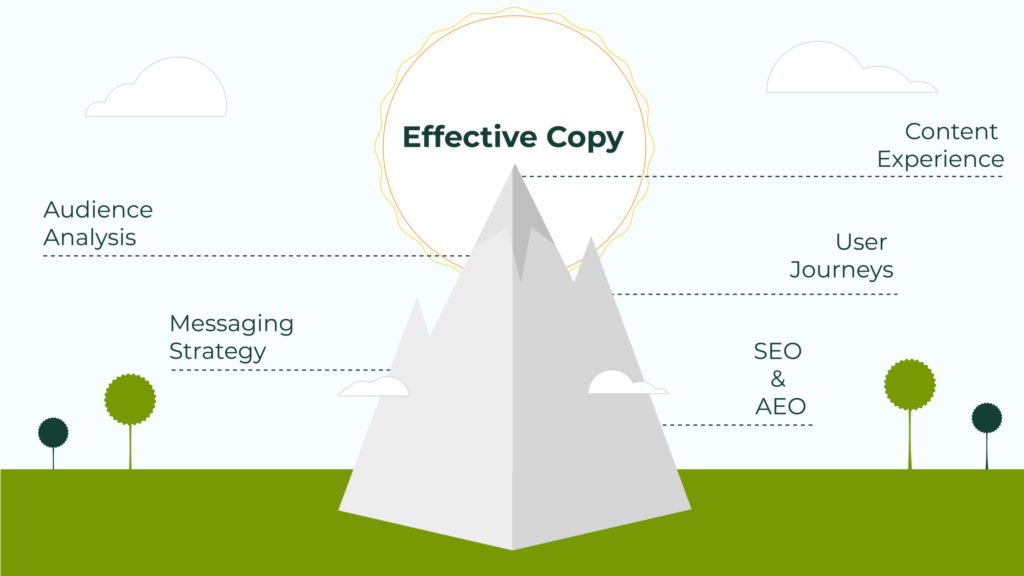
Effective copy starts before we’ve written the first draft, with a clear picture of where you are and what you’re trying to accomplish.
For starters, you’ll need to clearly understand:
- Your audience and their needs
- Your goals and services
- The questions your website needs to answer
From there, content planning shapes key messages and defines what belongs on each page. We use content outlines and content maps to show what pages are needed and how they connect across the site. Once this structure is in place, we can define what each page needs to communicate.

Content Planning Maps for Riverview Hospital
This is what makes the planning phase so valuable. It gives teams a shared direction and makes it easier to create content efficiently across a full website. Even more importantly, it reduces guesswork along the way.
Before writing we ask:
- How will a specific user type move through the site?
- What do they need to know first?
- What might make them pause, hesitate, or leave?
- What will help them feel confident enough to take action?
Effective content supports the full site experience. The words on the page need to be clear, but they also need to fit the flow of the site and support the person using it.
Our work with TopBloc is a good example of what that planning looks like in practice. This project had several distinct challenges to navigate:
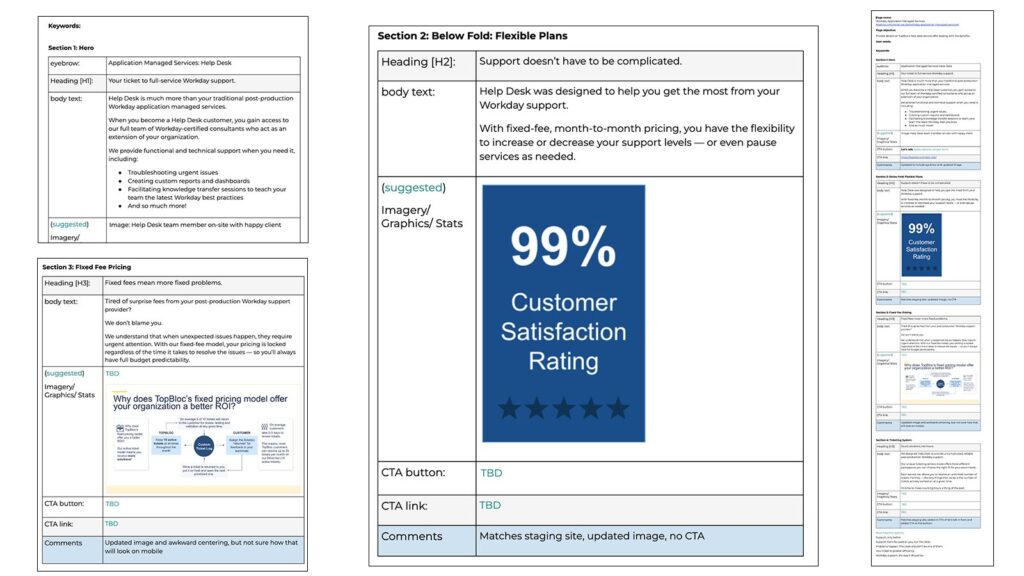
Content Outlines For TopBloc
- A technically complex subject. TopBloc operates in a niche space, providing Workday implementation and support to organizations that already knew the platform. The revised copy needed to speak to that audience without oversimplifying or relying on jargon that would exclude anyone newer to the ecosystem.
- A site that had outgrown its structure. Content had spread across multiple pages and no longer reflected how their services were organized. We consolidated it so the site matched the business as it actually existed.
- Deeply institutional language. Much of the existing copy read as corporate and static. A significant part of the rewrite was about making the content more conversational and benefit-led.
How to write copy that performs well in search
Search is changing. People still use search engines, but they’re also using AI assistants like Claude, Gemini and others. This means writing for search now looks a lot like writing for people: the clearer and more useful your content is, the more likely it is to be found and understood.
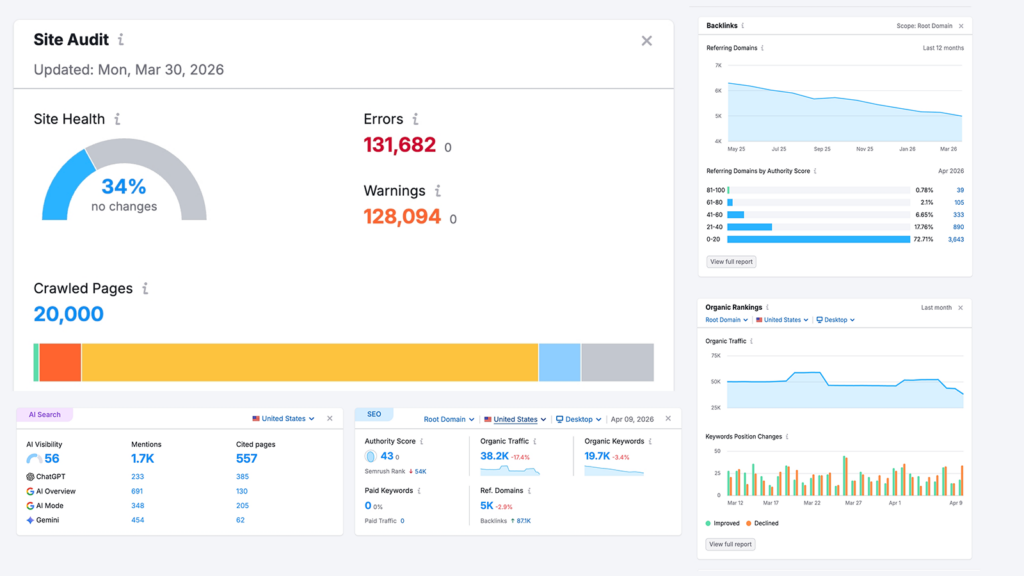
SEO/AEO Analysis for Flagler College
We saw this firsthand with a client of ours, Flagler College. There was very little consistency between their web pages. Some were written in a clear marketing voice, while others were dense with academic language. Often these vastly different writing styles appeared within the same menu grouping.
We rewrote the copy to fit their new brand voice, and visitors could find what they needed faster. Both search engines and AI assistants tend to reward that kind of clarity.
A practical checklist for stronger website copy
Effective website copy is clear, useful and built around what people need to know and do. To make these ideas easier to apply, we created a downloadable checklist with five essentials for stronger website copy. You can use the image below, but we’ve also included it in text as well:
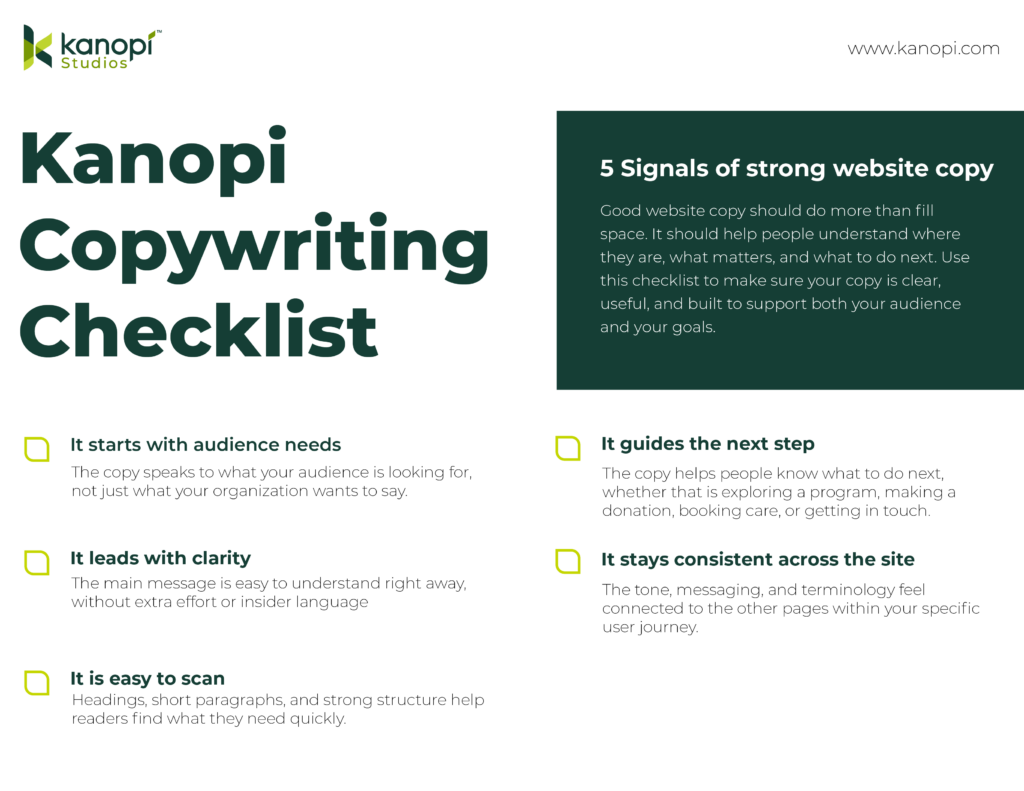
Kanopi Copywriting Checklist:
- It starts with audience needs. The copy speaks to what your organization is looking for, not just what your organization wants to say.
- It leads with clarity. The main message is easy to understand right away, without extra effort or insider language.
- It is easy to scan. Headings, short paragraphs, and strong structure help readers find what they need quickly.
- It guides the next step. The copy helps people know what to do next, whether that is exploring a program, making a donation, booking care, or getting in touch.
- It stays consistent across the site. The tone, messaging, and terminology feel connected to the other pages within your specific user journey.
How effective copy supports your business goals
Messaging clarity matters even more for organizations juggling multiple audiences or competing priorities.
Sunnylands came to us facing that exact challenge. Our qualitative user research uncovered recurring points of confusion among website visitors. Many were unclear about whether Sunnylands actually is. Was it a public park? A museum? A venue for academic retreats? Between the navigation and the page copy, visitors simply weren’t getting the answers they needed.
Users also had difficulty finding up-to-date information about events and attractions that were happening in the park, or which ones required advance booking.
Those findings shaped how we approached the content. We restructured the copy to answer the most fundamental question first, giving visitors a clear sense of what Sunnylands is before asking them to explore further. We also reorganized event and attraction information to make time-sensitive details and booking requirements easier to surface.
Smart planning should never be optional.
When writers have a clear structure to work from, drafts come together faster and client reviews go more smoothly. The number of revision rounds drops significantly as well. That efficiency compounds across a full website project.
When budgets are tight, clients sometimes look at content planning as a line item they can trim. However, skipping the planning phase doesn’t remove that work from the project. It just moves it downstream, where it costs more to fix and takes longer to resolve. The writing takes longer, the revisions multiply and the timeline stretches in ways that are harder to recover from.
The projects that go smoothest and deliver the strongest results are almost always the ones that began with a solid content plan.